Exosomes: The Ingredient That Changed How Korea Thinks About Skin
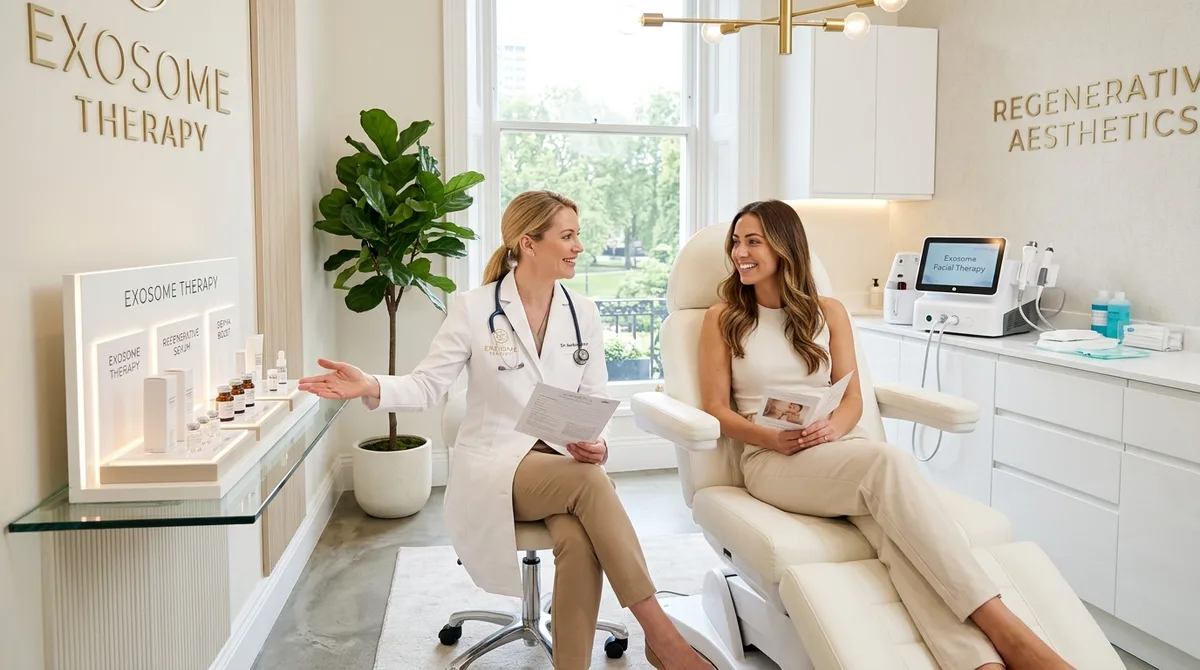
Every few years, a word migrates from research papers into beauty culture. In 2026, that word is exosomes. Featured in dermatology journals, adopted by Seoul's most respected skin clinics, and increasingly appearing on the shelves of Korean beauty brands — exosomes have moved from laboratory curiosity to mainstream skincare conversation with unusual speed.
But unlike most trending ingredients, the excitement around exosomes isn't driven by marketing. It's driven by biology.
These nanosized cellular messengers — naturally produced by every living cell to communicate with other cells — carry proteins, lipids, growth factors, and genetic material that influence how skin cells behave at a fundamental level. When applied to the skin in therapeutic concentrations, they don't just sit on the surface. They send instructions. They activate repair mechanisms. They tell your skin cells to do things they've gradually stopped doing on their own.
The result is a category of skincare that works differently from anything that came before it — and a growing body of clinical evidence that explains exactly why.
Here are seven proven benefits of exosomes for skin, and the science behind each one.
Benefit 1: Collagen and Elastin Production — Rebuilding What Age Takes Away
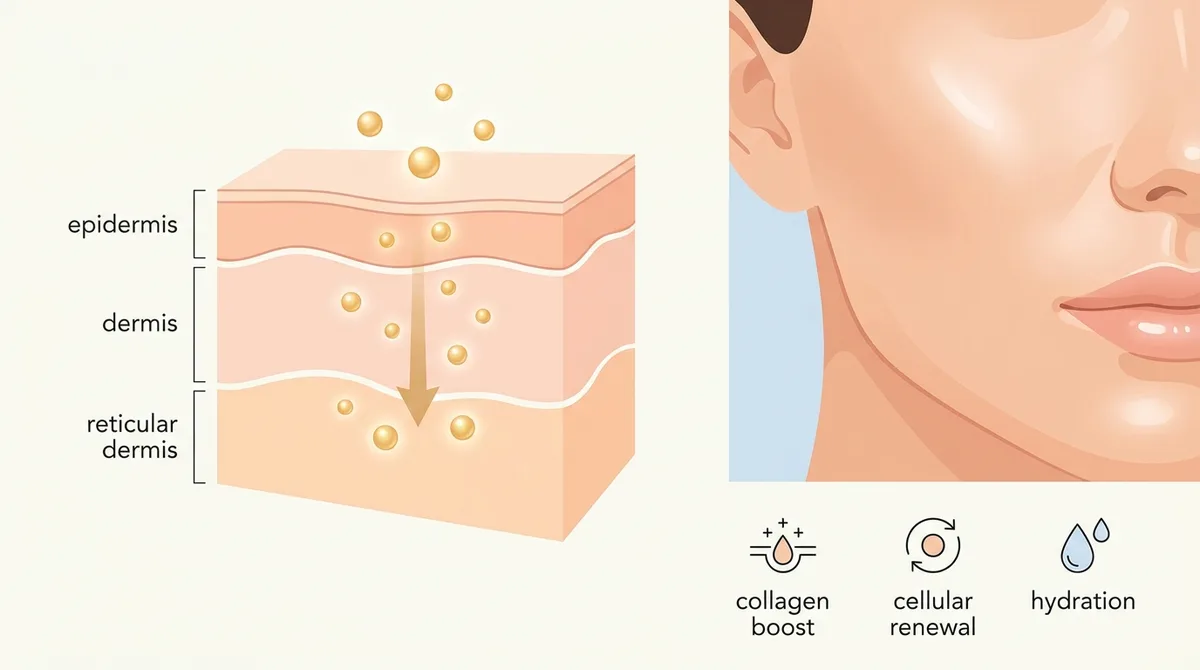
The most foundational benefit of exosome therapy — and the one with the most clinical backing — is its ability to stimulate collagen and elastin production in the dermis.
Collagen is the protein that gives skin its structure and firmness. Elastin gives it the ability to snap back after movement. Both decline steadily from your mid-twenties onward, and this decline is the primary driver of visible skin aging: fine lines, sagging, thinning, and the loss of that plump, bouncy quality that younger skin has.
Exosomes address this at the source. Research published in peer-reviewed dermatology journals has shown that exosomes derived from mesenchymal stem cells — including human adipose-derived stem cell exosomes like those in ASCE+ — increase collagen synthesis by activating fibroblasts, the skin cells responsible for collagen production. The mechanism involves the delivery of microRNAs and signaling proteins that stimulate fibroblast activity and regulate the extracellular matrix (ECM), the structural scaffold that holds skin cells together.
In a 2026 study published in the Journal of Cosmetic Dermatology, human-derived exosome injections including ASCE+ showed a statistically significant increase in collagen density compared to controls — a measurable, histologically confirmed improvement in skin structure.
Plant-derived exosome formulas like EXO NAD+ also contribute to this process. The red ginseng callus exosomes in the formula carry ginsenosides that stimulate hyaluronic acid synthesis in the dermis and support the cellular environment in which collagen production occurs. The centella asiatica exosomes deliver madecassic acid and asiaticoside — compounds with well-documented collagen-stimulating properties.
The bottom line: Exosomes don't top up collagen like a filler. They tell your skin cells to produce more collagen themselves. The results build over time and reflect genuine structural improvement.
Benefit 2: Accelerated Post-Procedure Healing — Less Downtime, Better Results
This is where exosomes have made their biggest clinical impact in Korean dermatology — and why they've become standard protocol in Seoul's best skin clinics.
After laser resurfacing, RF microneedling, chemical peels, or any procedure that creates controlled skin injury, the skin enters an acute repair phase. It's inflamed, temporarily compromised, and working hard to rebuild. How well it heals during this window directly determines the final result.
Exosomes dramatically improve this healing window. Applied topically or via microneedling immediately after a procedure — when the skin barrier is temporarily open and absorption is at its peak — exosomes deliver concentrated regenerative signals directly to the cells that need them most.
Clinical observations from Korean clinics consistently report significantly faster reduction in post-treatment redness and swelling when exosomes are applied post-procedure. Patients using ASCE+ after laser treatments report noticeably shorter downtime and better texture outcomes compared to standard recovery protocols.
The mechanism is well-understood: exosomes carry anti-inflammatory cytokines that calm the acute inflammatory response, growth factors that accelerate tissue regeneration, and signaling proteins that coordinate the repair process more efficiently than the skin can manage alone.
For anyone considering laser or energy-based treatments in a Korean clinic, asking about exosome post-procedure application is not an optional extra. In 2026, it's how Seoul's best clinics consistently deliver their strongest results.
Benefit 3: Barrier Repair and Restoration — Fixing What's Broken at the Root
The skin barrier — the outermost layer of the skin — is arguably the most important factor in skin health. When it's intact, it keeps moisture in and environmental irritants out. When it's compromised, everything goes wrong: dehydration, sensitivity, inflammation, breakouts, and accelerated aging all follow.
Exosomes have demonstrated a remarkable ability to restore barrier function — not by coating the surface, but by signaling the cells that build the barrier to do their jobs better.
Research on adipose-derived stem cell exosomes (ASCE) has shown that they restore epidermal barrier function by stimulating the production of ceramides — the lipids that form the mortar between skin cells and are essential for barrier integrity. The study found that ASCE treatment increased ceramide production at the cellular level, leading to measurable improvements in barrier function in patients with atopic dermatitis-related facial redness.
This has significant implications beyond clinical skin conditions. For anyone dealing with chronically dehydrated skin, over-cleansed or over-exfoliated skin, environmentally damaged skin, or a barrier compromised by years of aggressive skincare — exosomes offer a repair pathway that goes deeper than any moisturizer or ceramide cream.
Plant-derived exosomes contribute to barrier health too. Centella asiatica exosomes support wound healing and provide the anti-inflammatory environment that allows barrier reconstruction to happen. Camellia japonica exosomes bring flavonoids and polyphenols that protect against oxidative stress — one of the key drivers of barrier degradation.
The bottom line: If your skin is sensitive, reactive, dehydrated, or perpetually irritated, exosomes address the underlying biology rather than just managing the symptoms.
Benefit 4: Reduction of Inflammation — Calm That Goes Deeper Than the Surface
Chronic low-grade inflammation is now recognized as one of the primary drivers of skin aging — a process researchers call "inflammaging." It contributes to collagen breakdown, barrier dysfunction, hyperpigmentation, and an overall decline in skin quality that accelerates over time.
Exosomes are among the most effective anti-inflammatory agents in modern dermatology — and their mechanism is more sophisticated than that of traditional anti-inflammatory skincare ingredients.
Rather than simply blocking inflammatory pathways (as niacinamide or azelaic acid do), exosomes carry anti-inflammatory microRNAs and cytokines that actively modulate the immune response at a cellular level. They essentially recalibrate the skin's inflammatory signaling rather than just dampening it temporarily.
This is why Exomage™ by ExoCoBio — a product specifically formulated for skin immune modulation — has become increasingly used in Korean clinics for patients with rosacea, chronic sensitivity, and persistent post-inflammatory hyperpigmentation. These are conditions driven by immune dysregulation, and exosomes address them at the source.
In vitro testing of plant-derived centella asiatica exosomes has shown a 55% reduction in pro-inflammatory markers — a meaningful figure that reflects genuine anti-inflammatory biological activity rather than surface-level soothing.
The bottom line: For skin dealing with chronic inflammation — whether from rosacea, sensitivity, environmental damage, or aggressive past skincare — exosomes offer a calming effect that works at the biological level.
Benefit 5: Skin Brightening and Hyperpigmentation Reduction
Uneven skin tone, dark spots, and hyperpigmentation are among the most common skin concerns worldwide — and among the hardest to treat effectively without causing irritation or rebound.
Exosomes address hyperpigmentation through multiple mechanisms simultaneously, which is what makes them particularly effective for this concern.
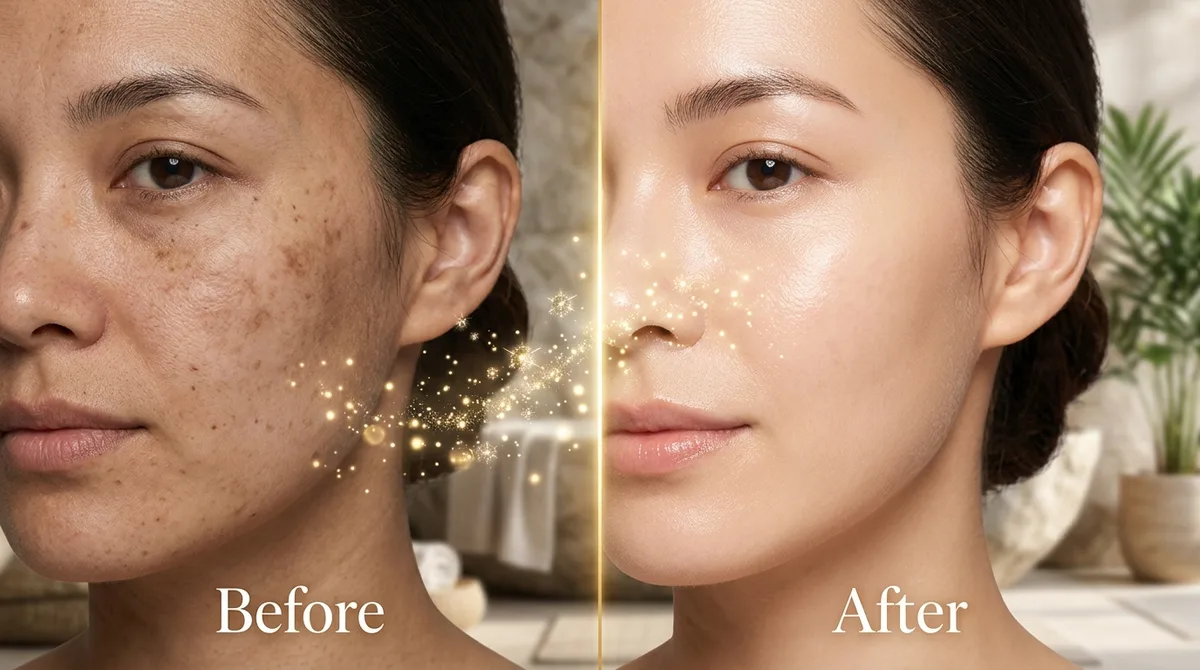
Human stem cell-derived exosomes carry signaling molecules that regulate melanin production — the pigment responsible for dark spots — by modulating the activity of melanocytes, the cells that produce it. A 12-week clinical study on topical platelet-derived exosomes found that 87.3% of participants reported improvement in pigmentation, alongside overall skin rejuvenation and redness reduction.
Plant-derived exosomes contribute to brightening through their botanical cargo. The red ginseng exosomes in EXO NAD+ inhibit tyrosinase activity — the enzyme that drives melanin synthesis — providing a brightening effect that's cumulative and gentle rather than bleaching. The glutathione component of the EXO NAD+ formula adds a further brightening dimension, scavenging free radicals that trigger pigmentation responses.
Unlike harsh brightening actives that can cause irritation or rebound darkening if used incorrectly, exosome-based brightening works by addressing the cellular signals that cause pigmentation in the first place — a more intelligent and sustainable approach.
The bottom line: Exosomes brighten skin through cellular signaling rather than surface-level bleaching — making them effective for a wide range of skin tones with minimal risk of irritation.
Benefit 6: Improved Skin Hydration and Water Retention
True skin hydration isn't about how much moisturizer you apply. It's about how well your skin cells produce and retain their own moisture — a function that declines with age, environmental damage, and barrier compromise.
Exosomes improve skin hydration at a cellular level by enhancing the skin's natural hyaluronic acid production and strengthening the barrier structures that prevent transepidermal water loss (TEWL).
The red ginseng exosomes in plant-derived formulas like EXO NAD+ have been shown to stimulate hyaluronic acid synthesis in the dermis — encouraging the skin to produce more of its own natural humectant rather than relying entirely on topically applied HA. Clinical studies on centella asiatica-derived exosomes have shown up to 12 hours of sustained hydration, with measurable improvements in skin moisture levels over a four-week period.
For human-derived exosomes, the ceramide-stimulating action described in benefit three contributes directly to water retention — a stronger, more intact barrier loses less moisture to the environment, resulting in consistently more hydrated, plumper skin over time.
The bottom line: Exosomes improve hydration from the inside out — by enhancing your skin's own moisture production and retention mechanisms, not just adding water to the surface.
Benefit 7: Anti-Aging — Turning Back the Cellular Clock
Everything covered in the previous six benefits contributes to this final one — because anti-aging isn't a single mechanism. It's the cumulative result of more collagen, better barrier function, less inflammation, improved hydration, and more even skin tone, all working together.
But exosomes also address aging through a mechanism none of the above covers individually: cellular senescence.
As skin ages, an increasing proportion of its cells enter a state called senescence — they stop dividing and functioning properly but don't die, instead secreting inflammatory compounds that degrade the surrounding tissue. Senescent cells accumulate over time and are a major driver of the structural decline we associate with aging skin.
Research on stem cell-derived exosomes has shown they can reduce markers of cellular senescence in skin fibroblasts — essentially helping aging cells function more like younger ones. The antisenescence effect of adipose-derived stem cell exosomes on human skin fibroblasts has been confirmed in peer-reviewed research, with evidence of improved cellular activity, morphology, and migration.
NAD+ — included in the EXO NAD+ formula at 98% purity — works synergistically with exosomes in this regard. NAD+ is a coenzyme essential for cellular energy production and DNA repair, levels of which decline significantly with age. By replenishing NAD+ alongside delivering regenerative exosome signals, the formula addresses cellular aging from two angles simultaneously.
The bottom line: Exosomes don't just make aging skin look better — they help aging skin cells function better. The result is visible improvement that reflects genuine biological change rather than cosmetic masking.
How to Get These Benefits: Clinic vs. At-Home
Understanding the benefits is one thing. Knowing how to actually access them is another.
In a Korean Clinic
The highest concentration of benefits comes from clinical exosome treatments — particularly when combined with energy-based procedures. Post-procedure application of ASCE+ after laser or RF microneedling delivers benefits 2, 3, and 4 at maximum intensity, during the window when skin is most receptive. Standalone exosome skin boosters and Exomage™ protocols address benefits 1, 5, 6, and 7 through a series of sessions over time.
If you're visiting Korea specifically for skin treatments, adding exosome therapy to your clinic protocol is one of the highest-value upgrades you can make.
At Home
For daily maintenance and long-term skin health building, plant-derived exosome products offer meaningful access to all seven benefits at home. EXO NAD+ by Cherry Medi, with its combination of three botanical exosome sources, NAD+, PDRN, and eight targeted peptides, is designed specifically for this purpose — delivering comprehensive regenerative benefits in a format stable and safe enough for regular at-home use.
The key with at-home exosome products is consistency. These aren't ingredients that work in a single application. They build results over weeks and months, which is exactly how the most significant skincare transformations have always happened.
Are There Any Downsides?
Honest answer: very few, when products are properly formulated and sourced.
Human-derived exosome products carry a small theoretical risk of immune response if not properly purified — which is why KFDA-registered products from verified manufacturers like ExoCoBio matter. Plant-derived exosomes carry essentially no immunogenicity risk.
The main limitation is that the exosome market is growing faster than regulation in some markets, meaning not every product claiming to contain exosomes delivers meaningful concentrations. When evaluating any exosome product, look for clearly stated particle counts, verified sourcing, and regulatory compliance — the same standards applied to the products featured throughout MyGuideKorea's exosome coverage.
The Bottom Line
Seven benefits. Each one backed by science. Each one representing a different dimension of what genuinely healthy, well-functioning skin looks like.
Exosomes don't work by masking skin concerns or temporarily improving appearance. They work by changing how skin cells behave — sending the biological instructions that cause skin to repair, regenerate, and function the way it did when it was younger and healthier.
That's why Korean clinics adopted them so quickly. And it's why, in 2026, the question for most serious skincare consumers is no longer whether to incorporate exosomes — it's which ones, how, and in what combination.
The science has answered the first question. The rest is just finding the right protocol for your skin.
Interested in exosome treatments at verified Korean clinics in Seoul? Browse our clinic directory at MyGuideKorea for trusted recommendations matched to your skin concerns and goals.