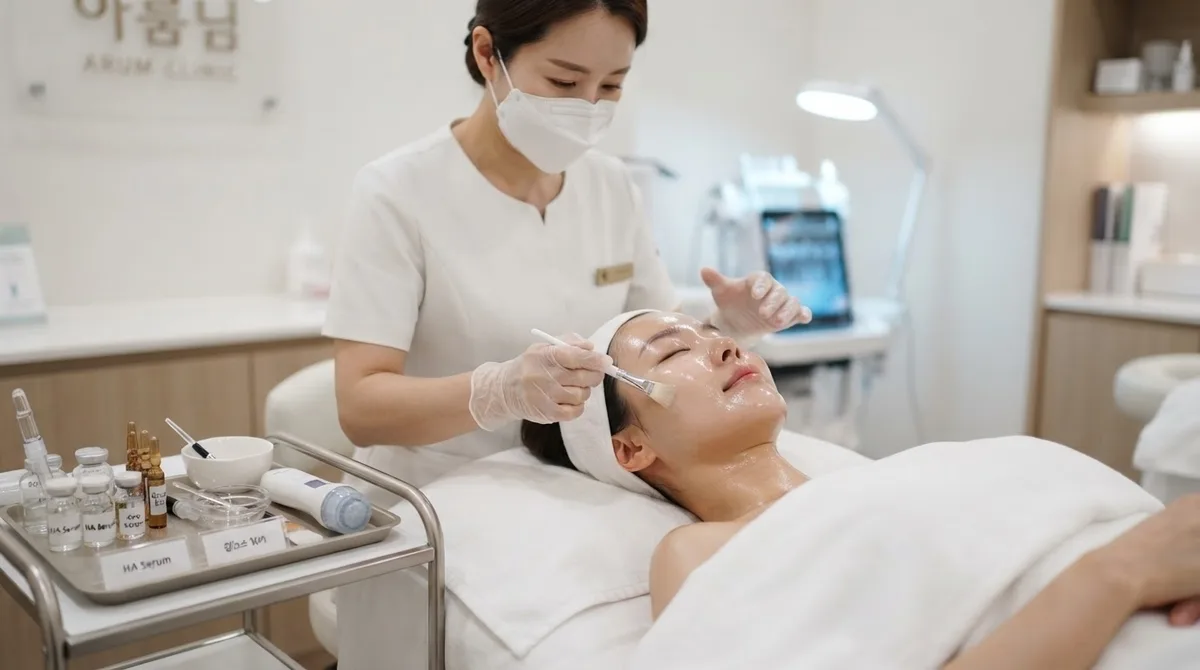
A glass skin facial in Seoul is not one procedure. It is a combination of two or three treatments stacked in sequence, each doing a different job. The Aqua Peel cleans and hydrates at the surface. The laser toning brightens and evens the tone underneath. The skin booster delivers hydration and repair into the dermis that topical products cannot reach. You can have one, two, or all three depending on your budget, your available time in Seoul, and what your skin needs.
The term "glass skin facial" is a category description used by clinics to attract visitors searching for Korean glass skin treatments. It does not describe a single proprietary procedure. Two clinics offering a glass skin facial may be offering significantly different treatment stacks. Understanding what each component does helps you evaluate what a clinic is actually proposing.
The three-layer stack: what each treatment does
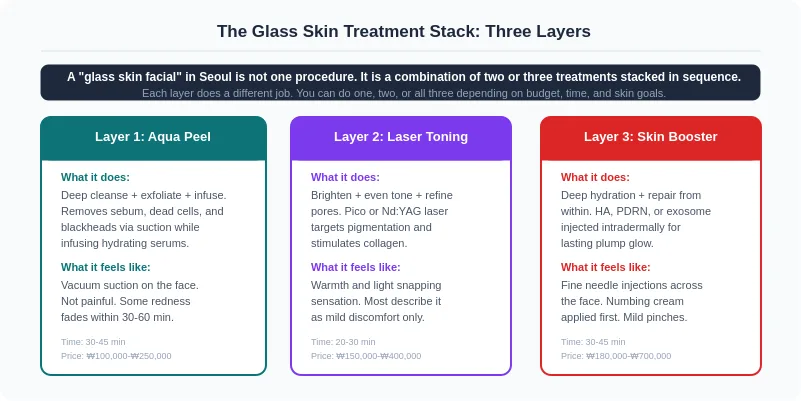
Aqua Peel (also called water peel, aqua facial, or hydrafacial equivalent) is the foundation layer. A handheld device simultaneously exfoliates the skin's surface and infuses hydrating serums through vacuum suction. The device extracts sebum, dead skin cells, and blackheads from pores while the suction delivers serum deeper than topical application alone would reach. The sensation is a consistent vacuum-suction feeling across the face, not painful, with mild redness that fades within thirty to sixty minutes.
Zero downtime. Makeup fine the same day. Time: 30-45 minutes. Price: ₩100,000-₩250,000.
Laser toning (pico or Nd:YAG) is the step that produces brightening and pore-refining that separates clinical glass skin treatment from anything achievable with topical products. Pico laser delivers extremely short energy pulses that shatter pigment without heating surrounding tissue -- brightening and pigmentation reduction with minimal redness. Nd:YAG heats the dermis to stimulate collagen and tighten at the pore level. Both produce warmth and a light snapping sensation during treatment, which most patients describe as mild discomfort rather than pain. Eye shields are placed before the laser begins.
Minimal downtime -- some redness and warmth for one to four hours. Time: 20-30 minutes. Price: ₩150,000-₩400,000.
Skin boosters (Rejuran/PDRN, HA injections, exosome) deliver the deepest, most lasting hydration effect. Fine needles inject the active substance directly into the dermis at multiple points across the face, bypassing the barrier limitations that prevent topical products from reaching this depth. Rejuran and PDRN-based products provide cellular repair that improves texture over a course of treatments. Numbing cream is applied before this step and needs twenty to thirty minutes to take effect. With adequate numbing, the injection sensation is a series of mild pinches. Tiny red dots at injection sites resolve within twelve to twenty-four hours.
No makeup same day. Full result visible at 7-14 days. Time: 30-45 minutes including numbing. Price: ₩180,000-₩700,000.
What happens from walking in to walking out
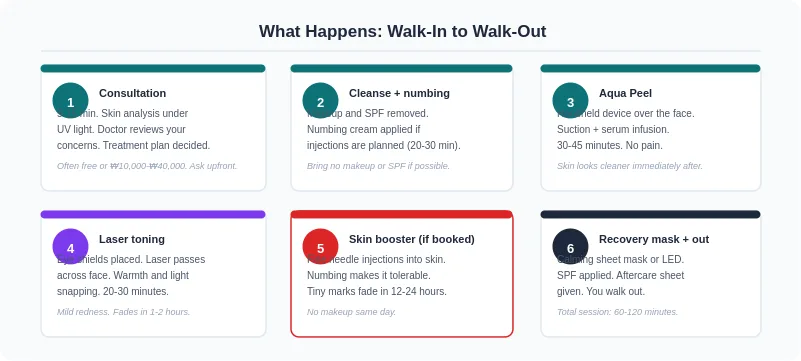
A typical glass skin appointment runs 60-120 minutes depending on which treatments are included and whether numbing cream is required.
Step 1 -- Consultation (5-15 min). Skin analysis under UV light or analysis device. Doctor reviews your concerns, skin history, and sensitivities, and proposes a treatment plan. Consultation fee is often ₩10,000-₩40,000 and frequently waived if you proceed with treatment -- confirm before sitting down.
Step 2 -- Cleanse and numbing. Makeup and SPF removed. If injections are planned, numbing cream is applied across the face and left for 20-30 minutes. Arriving without makeup saves time and reduces the risk of residue affecting treatment delivery.
Step 3 -- Aqua Peel. Runs first because it removes the surface layer of dead cells and sebum, meaning the laser works on cleaner skin and the skin booster injects into a cleared surface. 30-45 minutes, no pain.
Step 4 -- Laser toning. Eye shields placed. Laser passes across the face systematically. Warmth and light snapping sensation. Settings adjusted for skin type and patient response -- if the discomfort exceeds mild, tell the operator, the settings can be reduced in real time. 20-30 minutes.
Step 5 -- Skin booster (if booked). Fine needle injections into the dermis. With adequate numbing, tolerable. Session typically completed in 10-15 minutes of actual injection time.
Step 6 -- Recovery and out. Calming sheet mask or LED. SPF applied. Written aftercare sheet provided (often in English at clinics used to international visitors). Most patients describe the immediate post-session skin as visibly brighter and cleaner.
What you get at each price point
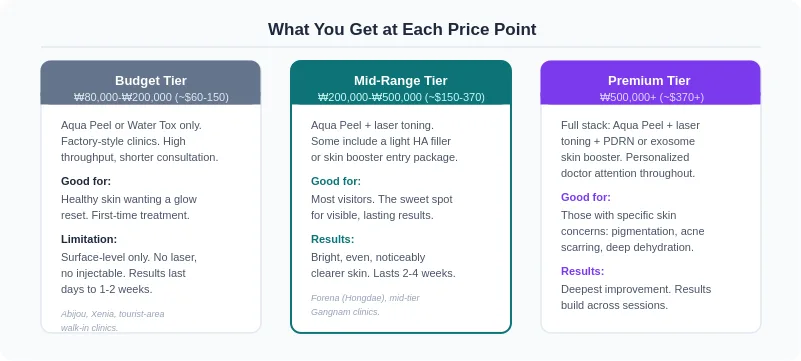
Budget tier (₩80,000-₩200,000 / ~$60-150): Aqua Peel alone, or occasionally Aqua Peel plus a single laser pass, at a factory-style high-volume clinic. Surface-level results only. No injectable. Results last days to 1-2 weeks. Good for: healthy skin wanting a pre-event glow reset. Limited for: specific skin concerns.
Mid-range tier (₩200,000-₩500,000 / ~$150-370): Aqua Peel plus laser toning, some clinics include an entry-level HA skin booster as part of a package. More substantive consultation, laser settings more carefully calibrated to your skin. Visibly meaningful results lasting 2-4 weeks. The sweet spot for most international visitors.
Premium tier (₩500,000+ / ~$370+): Full stack -- Aqua Peel plus laser toning plus PDRN or exosome skin booster -- with full doctor attention throughout. Best for visitors with specific concerns: persistent pigmentation, post-acne texture, deep dehydration. Single-session results visible for 4-6 weeks.
VAT refund on aesthetic treatments ended January 1, 2026. Prices now reflect the full amount. Seoul treatments remain significantly less expensive than equivalent procedures in the US or UK at comparable quality levels, even without the refund.
Factory-style vs boutique: the meaningful difference
Factory-style clinics handle high volume -- hundreds of patients per day across multiple treatment rooms. Lower prices because cost is distributed across large patient numbers. Clinical skill for routine procedures like Aqua Peel and standard laser toning is generally high from repetition. The limitation: brief consultation, standardised treatment plan, less personalisation.
Boutique clinics emphasise doctor continuity and individualised treatment planning. The doctor who conducts the consultation may also perform the treatment or supervise closely. Consultation is longer, skin analysis more detailed, treatment plan adjusts for your specific history. At the premium tier, this distinction matters: a visitor with post-inflammatory hyperpigmentation from acne needs different laser settings than a visitor with pure dehydration, and the boutique consultation is more likely to identify and address that difference.
Related treatments sometimes included
Dermotox (skin botox / micro-botox): Highly diluted botulinum toxin injected into the superficial dermal layer -- not into the muscle, so facial expression is unaffected. Tightens pore openings and smooths skin surface texture, contributing to the poreless quality that defines glass skin at its most refined. Often combined with Aqua Peel at Hongdae and Gangnam clinics. Results last approximately 2-3 months.
LED light therapy: Red light (630-670nm) as a calming closing step to reduce post-treatment redness. Non-invasive, no sensation beyond mild warmth. Does not contribute meaningfully to the glass skin result as a standalone treatment but serves as a recovery conclusion to sessions that included laser or injection steps.
Before, during, and after
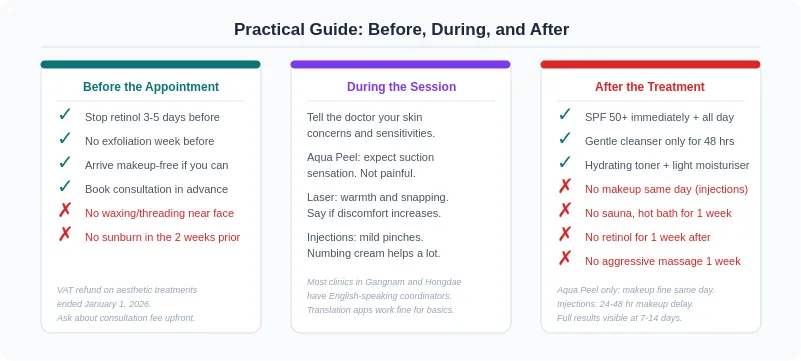
Before: Stop retinol 3-5 days prior. No exfoliation the week before. No waxing or threading near the face. Arrive without makeup if possible. Ask upfront whether the consultation fee is included.
During: Communicate your pain tolerance and any sensitive areas. Settings can be adjusted in real time. This is a medical treatment and practitioners are trained to respond to patient feedback.
After Aqua Peel only: SPF 50+ immediately, gentle cleanser for 48 hours, light moisturiser. Makeup fine that evening.
After laser or injections: No makeup for 12-24 hours. No sauna or hot bath for 1 week. No retinol for 1 week. No aggressive facial massage for 1 week. Full result of skin booster visible at 7-14 days.
- Glass skin facial = Aqua Peel + laser toning + optional skin booster. A stack, not a single procedure.
- Aqua Peel: ₩100,000-₩250,000. Zero downtime. Makeup fine same day.
- Laser toning: ₩150,000-₩400,000. Mild redness 1-2 hours. Brightens and refines pores.
- Skin booster (Rejuran/PDRN, HA, exosome): ₩180,000-₩700,000. No makeup same day. Full result at 7-14 days.
- VAT refund ended January 1, 2026.
- Consultation fee (₩10,000-₩40,000) is sometimes waived. Ask before sitting down.
- Factory-style: lower prices, standardised workflow. Boutique: more personalised, better for specific concerns.
For the at-home skincare that supports and extends these results, see the Mul-Gwang guide and the Honey Skin guide.
Related: Mul-Gwang: What Korean Dewy Water-Light Skin Actually Is | Honey Skin: The Korean Beauty Trend That Comes Before Glass Skin | Korean Sunscreen 2026: Why It Feels Nothing Like Western SPF