
The Question Every Exosome Conversation Eventually Reaches
Exosomes are now firmly part of the mainstream skincare conversation. Walk into a clinic in Gangnam, scroll through a Korean beauty forum, or talk to a dermatologist about what's actually moving skin science forward in 2026 — exosomes come up every time.
But as the category has grown, so has one specific question that keeps surfacing among patients, clinicians, and skincare enthusiasts alike: where do exosomes come from — and does the source actually matter?
The short answer is yes. Significantly.
Exosomes can be derived from several different biological sources — human stem cells, plant stem cells, animal tissue, and more. Each source produces exosomes with different molecular cargo, different stability profiles, different safety considerations, and different clinical applications.
In Korean clinics in 2026, two source types dominate the conversation: plant-derived exosomes and human-derived exosomes. They are not interchangeable. They don't do the same things. And knowing the difference will make you a much smarter consumer of what is rapidly becoming one of the most important ingredient categories in modern skincare.
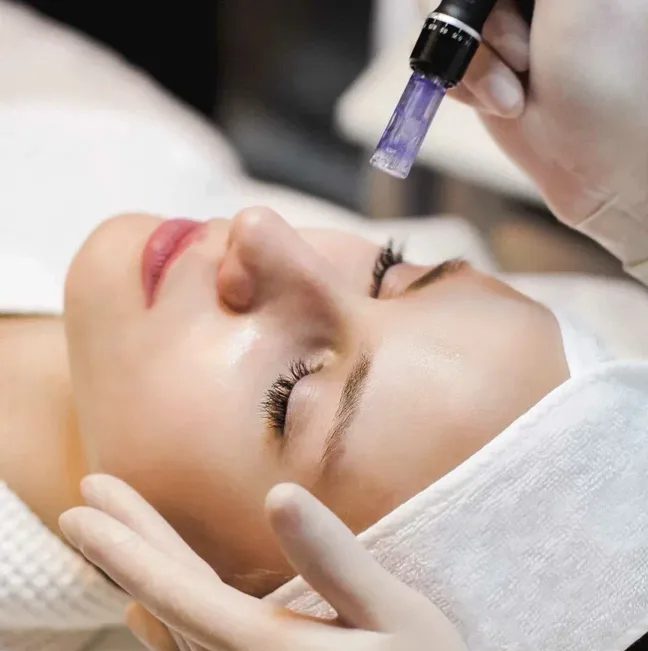
What Are Exosomes, and Why Does Source Matter?
Before comparing sources, a quick grounding in what exosomes actually are.
Exosomes are nanosized extracellular vesicles — between 30 and 150 nanometers — naturally secreted by living cells. Their job is communication: carrying proteins, lipids, and genetic material (including RNA) between cells to coordinate biological processes like repair, regeneration, and immune response.
In skincare, the goal is to harness this communication system. By delivering exosomes to skin cells, you're essentially sending biological instructions — telling your skin to produce more collagen, reduce inflammation, repair damaged tissue, or behave like a younger, healthier version of itself.
But here's what matters: the instructions an exosome carries depend entirely on the cell it came from.
A human adipose stem cell and a red ginseng plant stem cell are doing completely different things biologically. The exosomes they produce carry different molecular cargo, signal different cellular responses, and interact with human skin in different ways.
This is why source isn't just a marketing detail. It's the most fundamental thing about an exosome product.
Human-Derived Exosomes: The Clinical Benchmark
Human-derived exosomes — typically sourced from adipose (fat) stem cells, bone marrow stem cells, or umbilical cord tissue — are considered the closest biological match to what human skin cells naturally respond to.
The logic is straightforward: human cells communicate with human cells every day. Exosomes derived from human stem cells carry signaling molecules that skin cells recognize immediately and respond to without translation. The biological language is identical.
What Human-Derived Exosomes Do Well
Collagen remodeling and angiogenesis: A 2026 peer-reviewed study published in the Journal of Cosmetic Dermatology confirmed that human-derived exosome injections — including ASCE+ by ExoCoBio — significantly increased collagen density and microvascular counts in intact skin compared to controls. This kind of structural improvement is what makes human-derived exosomes particularly valuable for anti-aging and post-procedure recovery.
Post-procedure recovery: Human-derived exosomes are especially effective at reducing downtime after aggressive aesthetic treatments. Clinical research on ASCE+ SRLV — ExoCoBio's flagship human adipose stem cell exosome product — has shown measurable reductions in post-treatment redness, faster barrier recovery, and improved final outcomes when applied after laser resurfacing or RF microneedling.
Barrier restoration: Research published in peer-reviewed dermatology journals has shown that adipose stem cell-derived exosomes (ASCE) can restore epidermal barrier function by stimulating the production of ceramides — the lipids that hold the skin barrier together. This makes human-derived exosomes particularly effective for compromised or chronically sensitive skin.
Inflammatory conditions: ASCE+ has clinical data supporting its use in conditions like rosacea, atopic dermatitis-related facial redness, and post-inflammatory hyperpigmentation — complex immune-driven conditions where the biological precision of human-derived exosomes makes a meaningful difference.
The Limitations of Human-Derived Exosomes
Human-derived exosomes are not without challenges, and Korean clinics are clear-eyed about these.
Stability: Human-derived exosomes are biologically fragile. They typically require cold chain handling and precise storage conditions to maintain potency. This is why serious clinical products like ASCE+ are formulated as lyophilized (freeze-dried) powders and reconstituted immediately before use.
Regulatory complexity: Because they originate from human tissue, human-derived exosomes face stricter regulatory scrutiny in many markets. In Korea, KFDA oversight is rigorous, which is actually a quality signal — it means products that pass are properly validated. But this also means the barrier to market entry is higher, and not every product claiming to contain human-derived exosomes has been properly assessed.
Ethical considerations: Sourcing human tissue — even through FDA or KFDA-compliant biobanks — involves ethical dimensions that some patients and consumers prefer to avoid.
Cost: Human-derived exosome products are significantly more expensive to produce and therefore more expensive to access, both in clinical and retail settings.
The Clinical Standard: ASCE+ by ExoCoBio
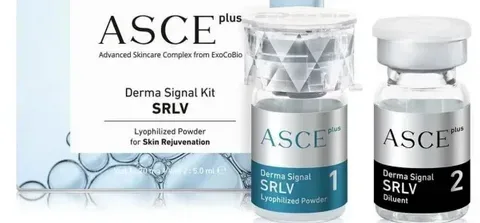
When Korean dermatologists talk about human-derived exosomes, ASCE+ is the reference point. Developed by Seoul-based biotech company ExoCoBio, ASCE+ uses their proprietary ExoSCRT™ isolation technology to produce ultra-high purity exosomes from human adipose stem cells.
The product is backed by over 75 patents and multiple peer-reviewed publications. It's used in some of Korea's most respected clinics — Oracle, Wonjin, Banobagi — primarily as a post-procedure amplifier that accelerates healing and improves clinical outcomes after laser, RF, and microneedling treatments.
ASCE+ SRLV (Skin Rejuvenation Lyophilized Vial) contains 5 billion purified ExoSCRT® exosomes per vial. The lyophilized format ensures stability and maximum potency at the moment of application — a critical design choice given how sensitive human-derived exosomes are to degradation.
For patients visiting Korean clinics specifically for aggressive skin treatments, ASCE+ represents the gold standard of post-procedure exosome care.
Plant-Derived Exosomes: The Safer, Scalable Alternative
Plant-derived exosomes are extracted from the stem cells (callus culture) of botanicals — sources like red ginseng, centella asiatica, camellia japonica, roses, turmeric, and others. They are fundamentally different from human-derived exosomes in origin, but share the same basic structure: nanosized vesicles that carry bioactive cargo capable of influencing skin cell behavior.
The plant exosome category has grown dramatically in Korean skincare in 2025 and 2026, driven by three factors: better safety profile, superior stability, and genuine clinical versatility.
What Plant-Derived Exosomes Do Well
Safety: Plant-derived exosomes carry no risk of human pathogen transmission and no immunogenicity concerns — your immune system doesn't flag them as foreign. As dermatology researchers have noted, plant exosomes are non-immunogenic, meaning human skin recognizes them without the risk of immune reaction. This makes them suitable for virtually all skin types, including the most sensitive and reactive.
Stability: Unlike human-derived exosomes, plant-derived exosomes are significantly more stable at varying temperatures. Many formulations remain active at room temperature without cold chain requirements — a major practical advantage for both clinic protocols and at-home use.
Scalability: Plant stem cell cultures can be produced at scale with consistent quality and without the ethical or logistical challenges of human tissue sourcing. This makes plant-derived exosomes more accessible across price points and more practical for both clinical and retail applications.
Botanical synergy: Plant-derived exosomes carry the bioactive compounds of their source plants — antioxidants, anti-inflammatory agents, skin-brightening molecules — alongside their regenerative signaling properties. This means the choice of plant source isn't arbitrary. Different botanicals bring different benefits.
Vegan and ethically clean: For consumers who prioritize cruelty-free and ethically sourced skincare, plant-derived exosomes are the clear choice.
The Plant Exosome Benchmark: EXO NAD+ by Cherry Medi
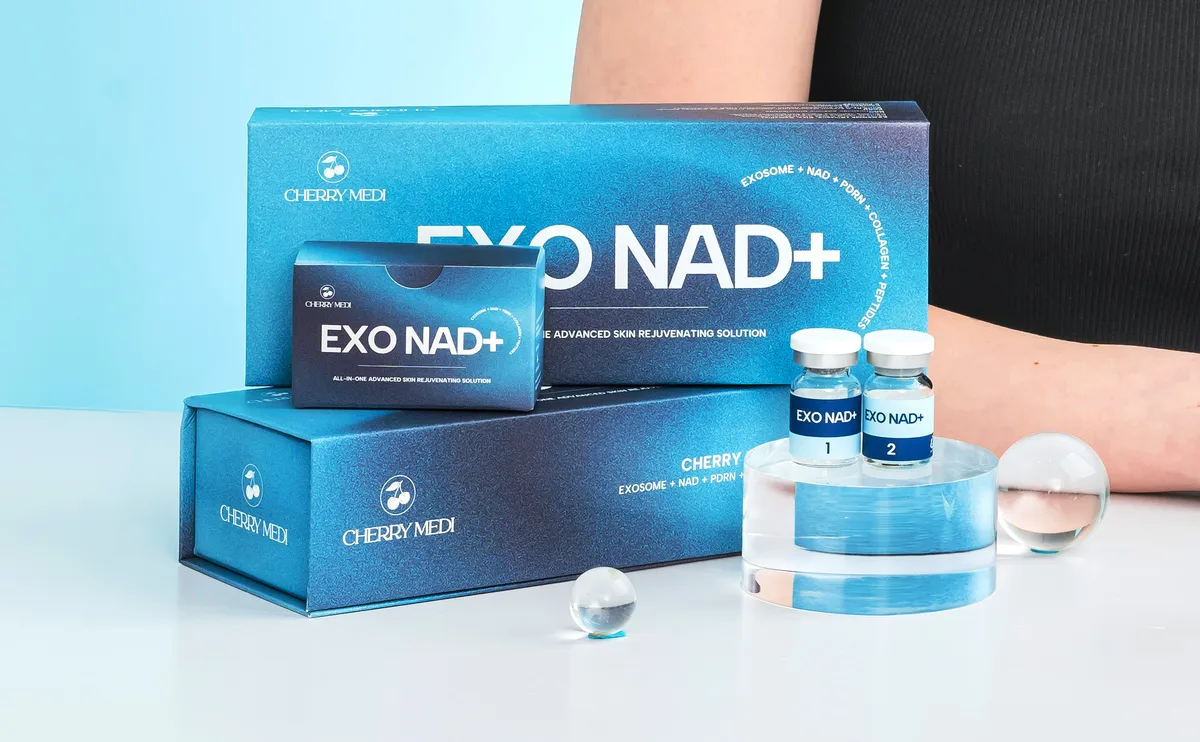
Among plant-derived exosome products currently used in Korean clinics and available for at-home use, EXO NAD+ by Cherry Medi stands out for the sophistication of its botanical sourcing and the depth of its formulation.
EXO NAD+ uses exosomes extracted from three distinct plant stem cell cultures, each chosen for specific skin benefits:
Red Panax Ginseng Callus Exosomes (11 billion particles/ml): Red ginseng contains ginsenosides — the active saponins that stimulate aging skin cell regeneration, promote hyaluronic acid synthesis in the dermis, and inhibit tyrosinase activity to prevent excessive pigmentation. Ginseng has centuries of use in Korean skincare and medicine; its exosomal form delivers these benefits at a cellular signaling level.
Centella Asiatica Callus Exosomes (1.1 billion particles/ml): Centella exosomes carry phytosterols and glycoside tannins that promote skin cell regeneration, support wound healing, and provide antibacterial and anti-inflammatory action. The active compounds madecassic acid and asiaticoside help stimulate collagen synthesis, improving elasticity and slowing visible aging.
Camellia Japonica Callus Exosomes (1 billion particles/ml): Rich in flavonoids, polyphenols, catechins, and methionine, camellia exosomes deliver powerful antioxidant protection, anti-inflammatory benefits, pore-tightening action, and sebum regulation.
Together, these three plant exosome sources deliver over 13 billion exosome particles per ml — a meaningful concentration that goes well beyond surface-level botanical extracts.
What makes EXO NAD+ particularly distinctive, however, is what surrounds those exosomes. The formula combines plant-derived exosomes with:
- NAD+ (98% purity) — the cellular energy molecule that activates repair mechanisms and significantly enhances the absorption and performance of every other ingredient
- PDRN (30,000 ppm) and PN (10,000 ppm) — French-manufactured, sourced from wild Alaskan salmon, European health authority authorized
- Atelocollagen and Hydrolyzed Collagen — structural support and moisture amplification
- Glutathione — brightening and antioxidant protection
- 8 targeted amino acid peptides — each addressing a specific skin concern
This all-in-one approach is what makes EXO NAD+ unusual in the plant exosome category. Most plant exosome products deliver botanical signaling on its own. EXO NAD+ uses the exosomes as the intelligent delivery system for a comprehensive bioactive formula — which is why Cherry Medi describes it as Korea's first all-in-one skin rejuvenating solution.
The product comes in a freeze-dried format: Ampoule 1 contains the lyophilized exosome complex, reconstituted with the PDRN solvent from Ampoule 2 immediately before use. This ensures maximum potency at the moment of application — the same stability principle that makes freeze-drying the gold standard for sensitive bioactive ingredients.
Plant vs. Human: A Direct Comparison
| Plant-Derived Exosomes | Human-Derived Exosomes | |
|---|---|---|
| Source | Botanical stem cell cultures | Human adipose, bone marrow, or umbilical cord stem cells |
| Biological match to human skin | Functional — skin responds well | Direct — identical biological language |
| Safety profile | Very high — no pathogen risk, non-immunogenic | High when properly sourced, but higher complexity |
| Stability | Superior — often room temperature stable | Fragile — typically requires cold chain |
| Regulatory complexity | Lower | Higher |
| Ethical concerns | None — vegan, cruelty-free | Requires human tissue sourcing |
| Cost | More accessible | Significantly higher |
| Best clinical use | Daily regeneration, at-home use, sensitive skin, post-procedure maintenance | Aggressive post-procedure recovery, deep regeneration |
| Key product | EXO NAD+ by Cherry Medi | ASCE+ by ExoCoBio |
What Korean Clinics Are Actually Choosing — And Why
The honest answer is that leading Korean clinics aren't choosing one over the other. They're using both — strategically, for different purposes.
Human-derived exosomes like ASCE+ are the post-procedure tool. After a Fraxel laser session, after RF microneedling, after any treatment that creates controlled skin injury — that's when the biological precision of human stem cell exosomes delivers its most significant value. The skin is open, receptive, and actively repairing. ASCE+'s direct biological match to human cell signaling makes it the most effective recovery amplifier available.
Plant-derived exosomes like EXO NAD+ serve a different but equally important role. They're the ongoing maintenance protocol — the treatment that patients use between clinic visits, or that clinicians recommend as a daily at-home product for long-term skin vitality. The combination of three botanical exosome sources with NAD+, PDRN, and eight peptides makes EXO NAD+ a comprehensive skin health investment that builds results over time.
Some Korean clinics are also beginning to use plant-derived exosome products as a gentler induction step before moving to more aggressive human-derived treatments — preparing the skin's cellular environment so it responds better to clinical intervention.
The two categories complement each other. In 2026, the most sophisticated approach isn't picking a side. It's understanding what each source does best and using both intelligently.
Which Type Is Right for You?
Human-derived exosomes (ASCE+) are the better choice if:
- You're visiting a Korean clinic for laser, RF, or microneedling and want maximum post-procedure recovery
- Your skin concerns are severe — deep scarring, significant aging, chronic inflammatory conditions
- You want the most clinically validated exosome treatment available
- You're working with a dermatologist who can administer and monitor treatment
Plant-derived exosomes (EXO NAD+) are the better choice if:
- You want a daily or regular at-home exosome treatment
- Your skin is sensitive, reactive, or prone to inflammation
- You prefer a vegan, ethically sourced formula
- You want a comprehensive all-in-one formula rather than a single-ingredient product
- You're building long-term skin health between clinic visits or without clinic access
Use both if:
- You're visiting Korea for clinical treatments and want to maintain results at home
- Your clinic uses human-derived exosomes for procedures and recommends plant-derived for between-session care
- You want the most complete exosome approach available in 2026
The Bottom Line
The plant vs. human exosome debate isn't really a debate at all — it's a question of application.
Human-derived exosomes speak the most direct biological language to human skin cells, making them the most powerful tool for acute clinical scenarios. Plant-derived exosomes offer superior safety, stability, and accessibility, making them the most practical choice for ongoing skin health.
In 2026, the most advanced Korean clinics understand this. They're not choosing sides. They're building protocols that use each source type where it performs best — and the patients benefiting from that thinking are seeing results that would have seemed extraordinary just a few years ago.
The science is settled on one thing: exosomes work. The question now is simply which ones, when, and for what purpose. And in Korea, the answers are getting more precise by the month.
Looking to experience exosome treatments in Seoul or find clinics using ASCE+ and plant-derived protocols? Browse our verified clinic directory at MyGuideKorea for trusted recommendations matched to your skin concerns and goals.