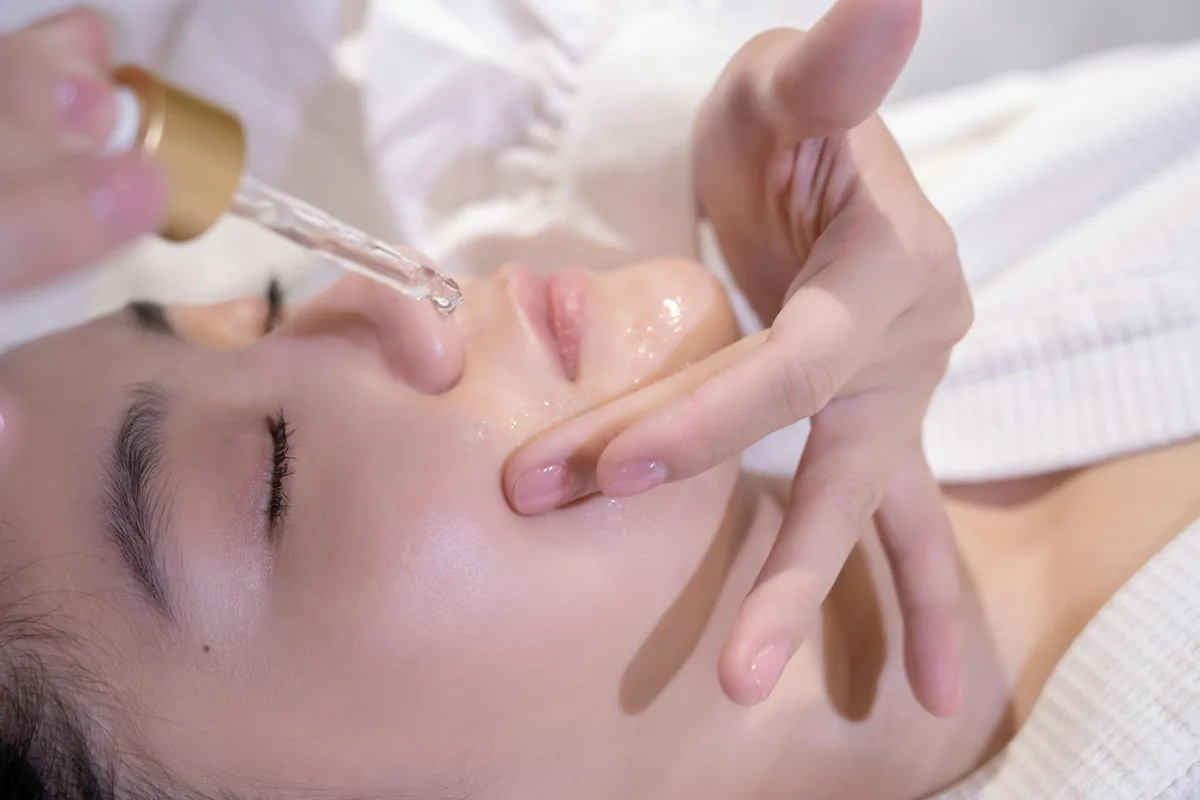
Why Korean Clinics Are Obsessed With Exosomes Right Now
Walk into almost any dermatology clinic in Gangnam today and you'll notice something on the treatment menu that wasn't there two years ago. Exosomes. Everywhere.
After laser sessions, after microneedling, after RF treatments — Korean doctors are reaching for exosome products to accelerate healing, amplify results, and deliver a quality of skin improvement that older protocols simply couldn't match.
And it's not just a trend. The science behind exosomes — tiny cellular messengers that carry regenerative instructions between cells — has been building in Korean biotech labs for over a decade. What's changed in 2026 is that the technology has matured enough to move from pure clinical research into real, reliable products that deliver consistent results.
The result is a new category of treatment that Korean clinics have quietly made standard practice. Not optional. Not experimental. Just — what good skin clinics do now.
But not all exosome products are equal. Concentration matters. Source matters. Formulation matters. And in a market that's moving this fast, knowing which products are actually worth your attention — and your skin — is genuinely valuable.
These are the five exosome products that Korea's top skin clinics are reaching for in 2026.
What Makes a Great Exosome Product?
Before we get into the list, it's worth understanding what separates a genuinely effective exosome product from one that's riding the trend without delivering the results.
Concentration: Exosomes need to be present in meaningful quantities to have a biological effect. Look for products that clearly state particle counts or concentration levels — not just "contains exosomes" in the ingredient list.
Source: Exosomes can be derived from human stem cells, plant stem cells (callus culture), or other biological sources. Each has different properties, stability profiles, and use cases. We'll explore this more in a dedicated article — but source transparency is a sign of a serious brand.
Stability: Exosomes are biologically active and can degrade if not properly formulated and stored. Freeze-dried formats (lyophilized) are considered the gold standard for maintaining potency until the moment of use.
Clinical backing: The best exosome products in Korean clinics are backed by peer-reviewed research, KFDA compliance, and real clinical data — not just marketing claims.
With that framework in mind, here are the five products making the biggest impact in Korean clinics right now.
1. EXO NAD+ by Cherry Medi — Korea's Most Comprehensive All-in-One Exosome Solution
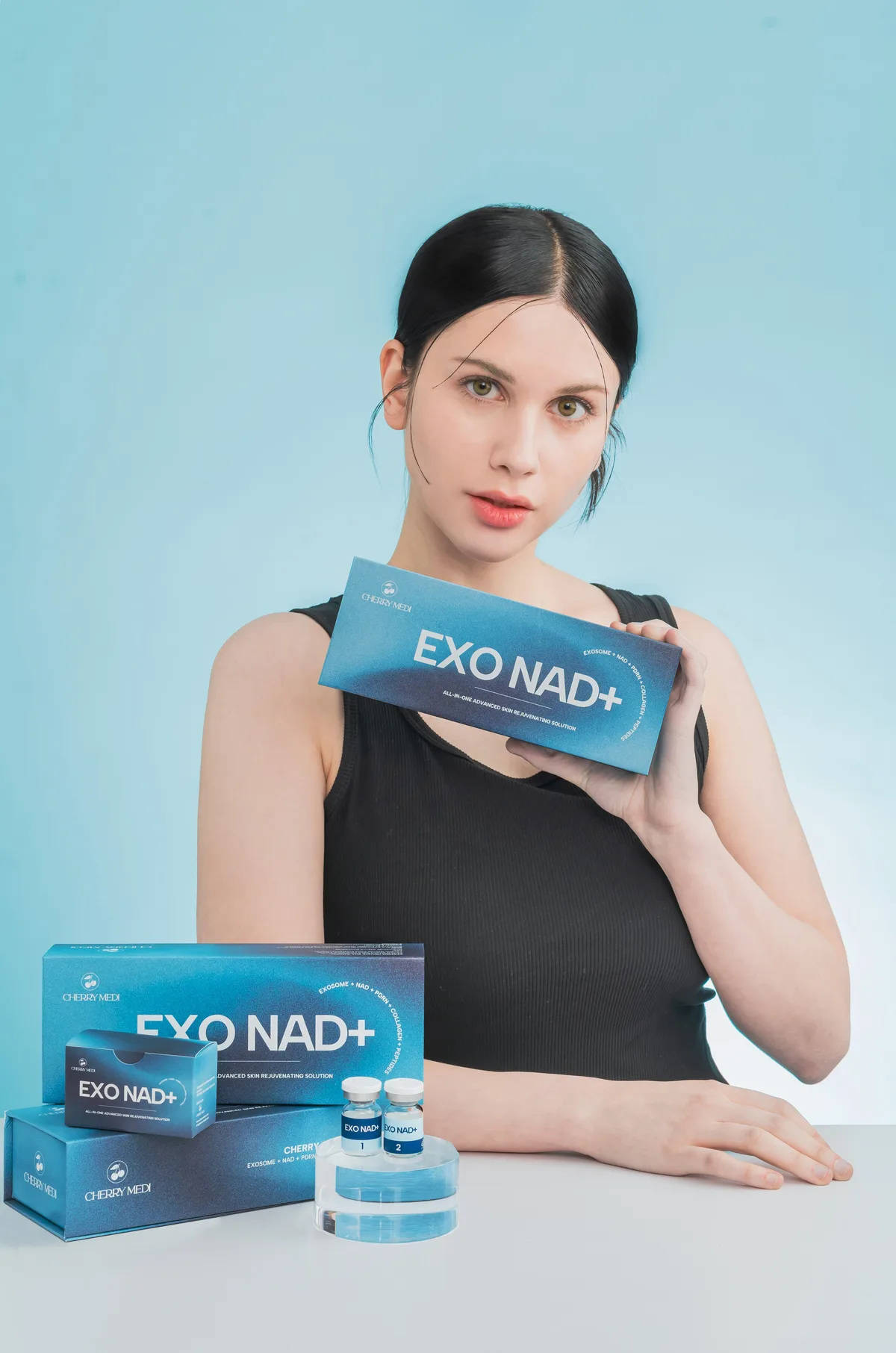
If you're looking for a single exosome product that does the most, EXO NAD+ is where the conversation in Korean clinics starts in 2026.
Developed by Seoul-based aesthetic brand Cherry Medi, EXO NAD+ isn't just an exosome product — it's what the brand calls an "all-in-one skin rejuvenating solution," and the formula backs that description up. Rather than isolating a single active, EXO NAD+ combines multiple clinically significant ingredients into one synergistic system:
- 3 Plant-derived exosomes (Red Panax Ginseng, Centella Asiatica, Camellia Japonica) — delivering over 13 billion exosome particles per ml
- NAD+ (Nicotinamide Adenine Dinucleotide) — a high-purity cellular energy molecule that activates repair mechanisms and enhances the performance of every other ingredient in the formula
- PDRN (30,000 ppm) and PN (10,000 ppm) — sourced from wild Alaskan salmon via a French manufacturer, authorized by European health authorities
- Atelocollagen and Hydrolyzed Collagen — for structural support and moisture amplification
- Glutathione — for its powerful brightening and antioxidant properties
- 8 amino acid peptides — each targeting a specific skin concern, from wrinkle inhibition to pigmentation control
The exosomes in EXO NAD+ are plant-derived — extracted from the callus culture medium of three different botanical stem cells. This makes the formula vegan-compatible and avoids the sourcing and ethical concerns associated with human or animal-derived exosomes, while still delivering potent regenerative signals to skin cells.
The freeze-dried format is particularly significant. Ampoule 1 contains the lyophilized exosome complex, which is reconstituted with the PDRN solvent from Ampoule 2 immediately before use — ensuring maximum potency at the moment of application.
Why clinics choose it: The combination of exosomes, NAD+, and PDRN in a single protocol-ready formula makes EXO NAD+ unusually versatile. It works as a standalone treatment and pairs exceptionally well with energy-based devices — lasers, RF microneedling, and ultrasound treatments all benefit from its regenerative and anti-inflammatory properties applied post-procedure.
Best for: Post-procedure recovery, overall skin vitality, anti-aging, brightening, and long-term skin health maintenance.
2. ASCE+ by ExoCoBio — The Clinical Gold Standard for Human-Derived Exosomes
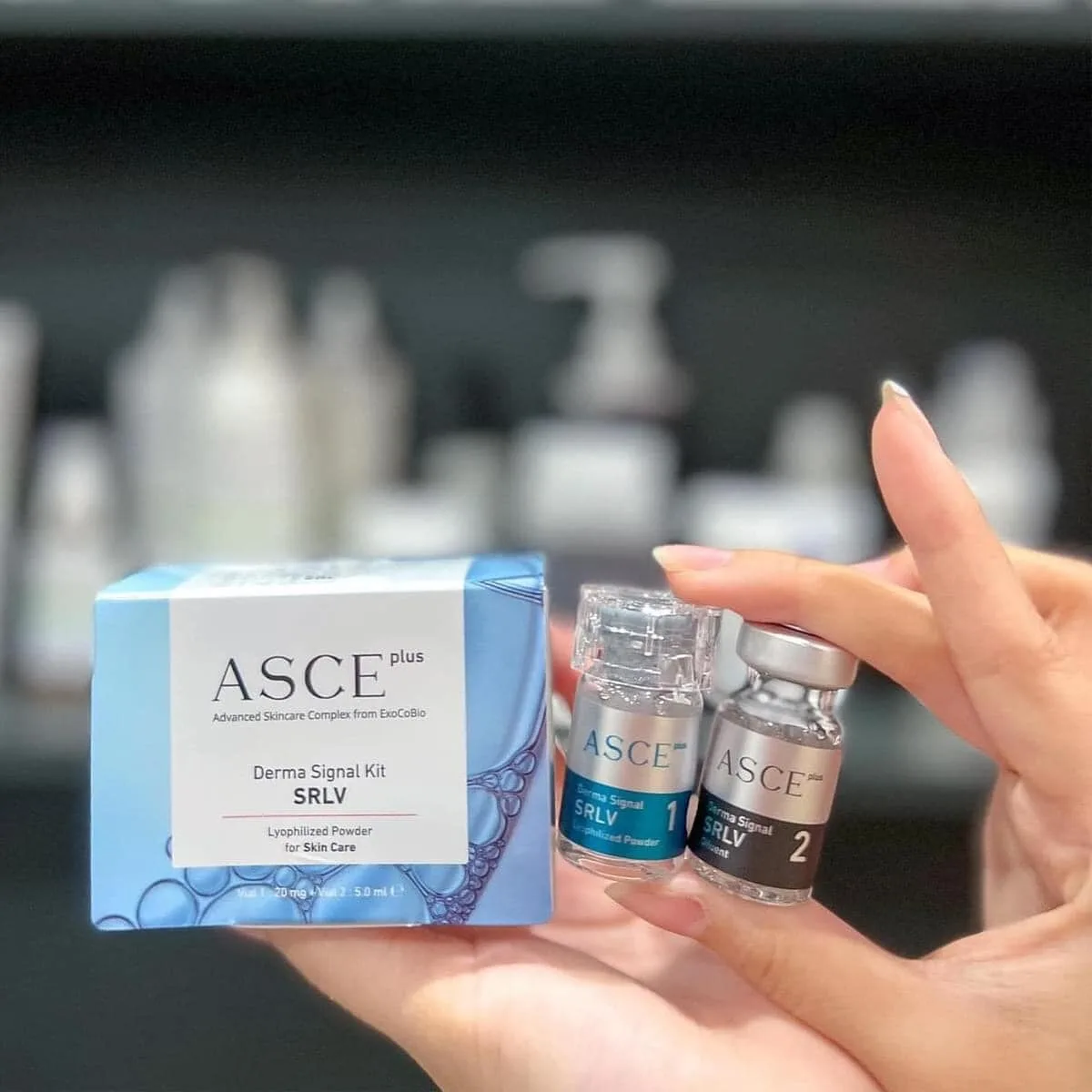
ExoCoBio is one of the most well-known names in Korean exosome science, and ASCE+ is their flagship clinical product. Where EXO NAD+ leads with a comprehensive multi-ingredient formula, ASCE+ is built around a singular focus: delivering the highest-quality human stem cell-derived exosomes available in a clinical setting.
ASCE+ contains exosomes sourced from human adipose-derived stem cells — a source that has been extensively studied and validated in peer-reviewed dermatology research. The product is used in some of Korea's most prestigious clinics, including Oracle, Wonjin, and Banobagi, primarily as a post-procedure amplifier applied after laser resurfacing or microneedling.
The clinical application is precise: ASCE+ is typically delivered either topically (immediately post-procedure when the skin barrier is temporarily compromised and absorption is at its peak) or via microneedling devices that drive it directly into the dermis.
Results are well-documented across clinical settings: faster reduction in post-laser redness, measurably shorter downtime, improved texture outcomes, and a regenerative depth that topical products applied to intact skin simply cannot reach.
ASCE+ is KFDA-registered and backed by peer-reviewed research, which makes it one of the most trusted choices for clinicians who want both efficacy and accountability.
Why clinics choose it: ASCE+ is the benchmark for human-derived exosome treatments. For clinics performing aggressive energy-based procedures, it's the most validated post-procedure recovery tool available.
Best for: Post-laser recovery, severe acne scarring, deep skin regeneration, significant anti-aging concerns.
3. Medicube Zero One Day Exosome Shot — The At-Home Clinic Experience
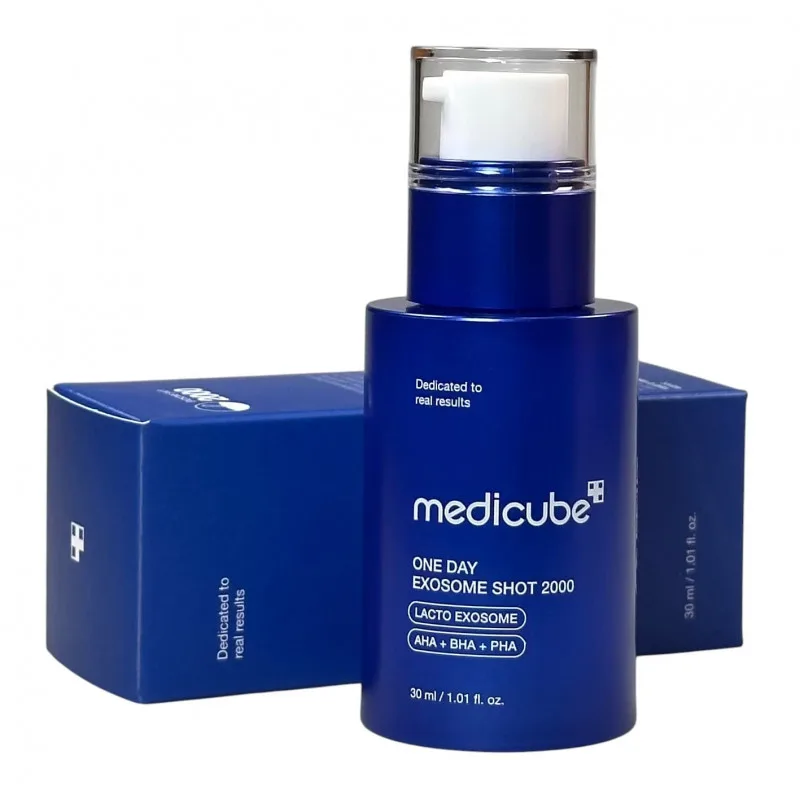
Medicube has been one of the most innovative Korean beauty brands of the past five years, and their Zero One Day Exosome Shot represents something genuinely new: a consumer product that bridges the gap between clinic treatment and at-home skincare.
The product's defining feature is its delivery system. Rather than simply applying exosomes to the surface of the skin — where absorption is limited — the Zero One Day Exosome Shot uses microscopic spicules (naturally derived micro-needles) that create tiny channels in the skin's surface. This temporarily compromises the outer barrier in a controlled, safe way, allowing the exosomes to bypass the dead surface layer and reach the live cell layers beneath.
The result is topical exosome delivery that gets meaningfully closer to the depth achievable in clinical settings — without the need for professional equipment or a clinic visit.
In Korea, the product went viral in early 2026 when skincare content creators began documenting immediate improvements in skin texture and luminosity after a single use. Clinics have since begun recommending it to patients as a between-visit maintenance tool, bridging the gap between professional sessions.
Why clinics choose it: As a take-home recommendation, the Medicube Exosome Shot gives clinicians a trusted consumer product to recommend for patient maintenance — one that delivers real exosome benefits without requiring another clinic visit.
Best for: At-home maintenance between professional treatments, texture improvement, luminosity, patients new to exosome skincare.
4. BENEV Exosome Regenerative Complex — The International Clinic Standard
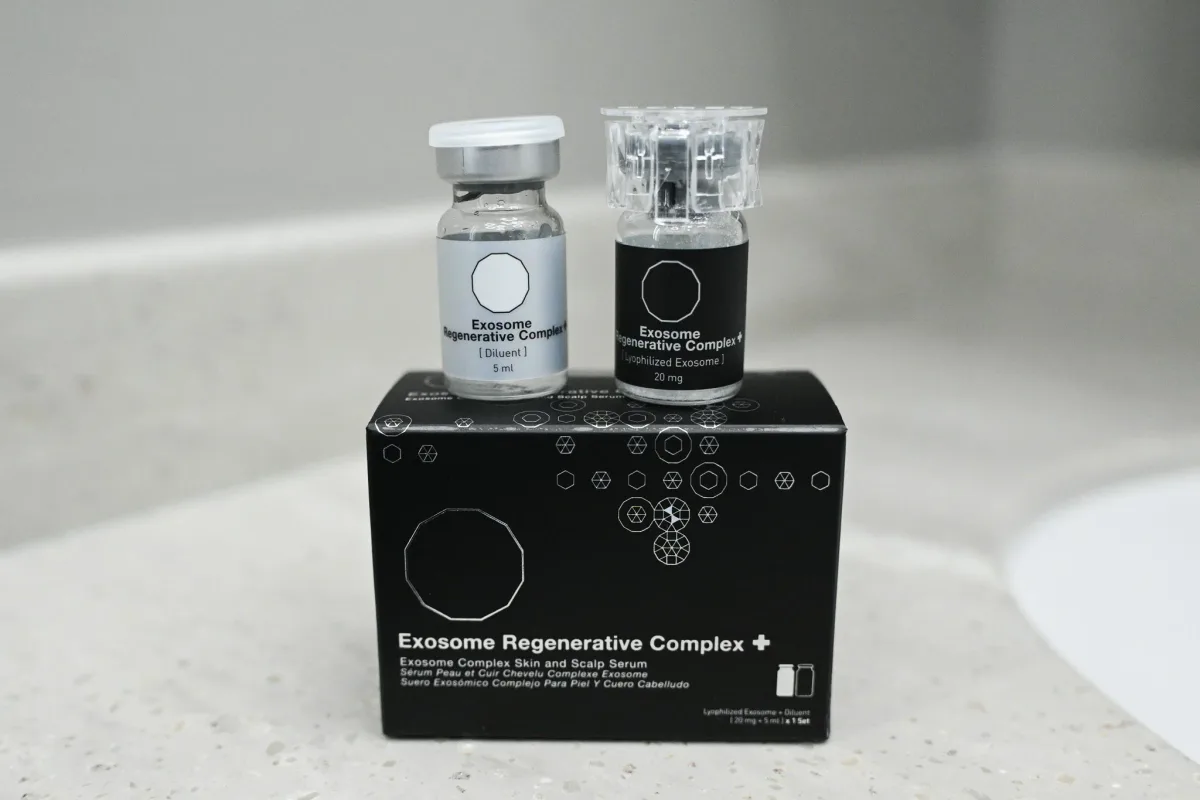
While Korean-developed, BENEV has built its reputation across international aesthetic medicine — and its Exosome Regenerative Complex is one of the most widely used exosome products in Korean clinics that treat international patients.
BENEV uses human umbilical cord stem cell-derived exosomes, which carry a rich cargo of growth factors and regenerative proteins. The formula is designed specifically for post-procedure application — it's applied immediately after ablative treatments to calm inflammation, accelerate tissue repair, and enhance the final result.
What makes BENEV particularly trusted in internationally-oriented clinics is its regulatory transparency. The product is clearly documented, the sourcing is disclosed, and the clinical research supporting it is accessible. For international patients who want to understand exactly what's being applied to their skin, that transparency matters.
Why clinics choose it: BENEV is the go-to choice for clinics with a strong international patient base — trusted, well-documented, and backed by solid research across multiple clinical settings.
Best for: Post-ablative recovery, international patient protocols, clinics requiring regulatory documentation.
5. Exomage by ExoCoBio — The Immune-Modulating Exosome Treatment
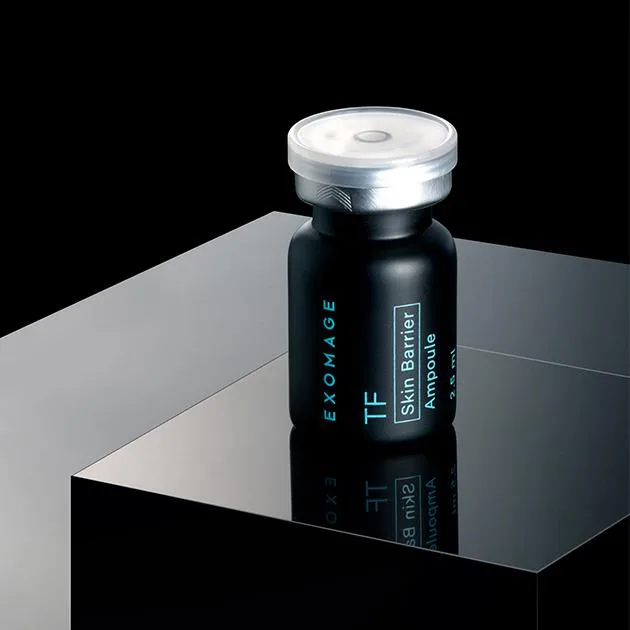
Most exosome products in Korean clinics focus on one primary goal: regeneration. Exomage™ takes a different angle — and that's precisely what makes it worth knowing about.
Developed by ExoCoBio, the same Korean biotech company behind ASCE+, Exomage™ is specifically formulated for skin immune modulation rather than straightforward post-procedure repair. Where ASCE+ is designed to accelerate healing after aggressive treatments, Exomage™ targets the underlying immune activity that drives chronic skin conditions — persistent inflammation, barrier dysfunction, sensitivity, and reactive skin that simply won't settle.
In Korean clinics, Exomage™ is increasingly used for patients whose primary concerns aren't wrinkles or scarring but rather skin that feels constantly irritated, reactive, or compromised. Conditions like rosacea, chronic sensitivity, and post-inflammatory hyperpigmentation respond particularly well — because Exomage™ works at the immune-signaling level, addressing the root cause rather than the surface symptom.
Like all ExoCoBio products, Exomage™ uses the company's proprietary ExoSCRT™ isolation technology, which produces ultra-high purity exosomes with verified particle counts — not "exosome-inspired" marketing language but a standardized, GMP-manufactured clinical product.
Why clinics choose it: For patients with reactive, sensitive, or chronically inflamed skin who aren't candidates for aggressive procedures, Exomage™ fills a gap that most other exosome products don't address. It's the choice for skin that needs calming and rebalancing at a biological level before anything else can work.
Best for: Rosacea, chronic skin sensitivity, post-inflammatory hyperpigmentation, barrier dysfunction, reactive skin types.
How to Choose the Right Exosome Product for You
With five strong options on this list, the right choice depends on what you're trying to achieve and where you're starting from.
| Best For | Format | Where to Access | |
|---|---|---|---|
| EXO NAD+ | All-round rejuvenation, post-procedure, at-home use | Freeze-dried ampoule | Clinic + retail |
| ASCE+ | Post-laser recovery, scarring, deep regeneration | Clinical application | Clinic only |
| Medicube Exosome Shot | At-home maintenance, texture, luminosity | Consumer serum | Retail |
| BENEV | International clinic protocols, post-ablative | Clinical application | Clinic only |
| Exomage™ | Rosacea, sensitivity, reactive & inflamed skin | Clinical treatment | Clinic only |
A Note on Quality and What to Look Out For
The exosome market in Korea is growing fast — and as with any fast-growing category, not everything on the market delivers what it promises.
When evaluating exosome products — whether for clinic use or at-home application — look for:
- Transparent particle counts — specific numbers (billions per ml) rather than vague claims
- Sourcing disclosure — plant-derived, human stem cell-derived, or otherwise clearly stated
- KFDA registration or equivalent regulatory compliance
- Freeze-dried or otherwise stability-optimized formulation
- Clinical research or peer-reviewed backing — especially for clinic-grade products
The five products on this list all meet these standards. They represent the current best of what Korean exosome science has produced — and they're the reason that, in 2026, walking out of a Seoul skin clinic with better skin than you walked in with has never been more reliable.
Planning a skin clinic visit in Seoul? Browse our verified clinic directory at MyGuideKorea for trusted recommendations and clinics offering exosome treatments tailored to your skin concerns and goals.