The first thing most people notice when they look into skin treatments in Seoul is the price. The same procedures that cost thousands in New York, London, or Dubai are routinely a fraction of that in Korea, and that gap is the single biggest reason beauty tourism here has exploded. But how much do treatments actually cost, why are they so much cheaper, and is cheaper ever a red flag? Here is the honest 2026 breakdown, with real price ranges and the things the glossy before-and-afters never mention.
A note before the numbers: every figure below is an approximate range in US dollars and varies by clinic, district, brand, and the number of shots or syringes used. Premium Gangnam and Cheongdam clinics sit at the top of each range; high-volume clinics sit at the bottom. Always confirm the exact price at consultation.
The headline: 50 to 70% less
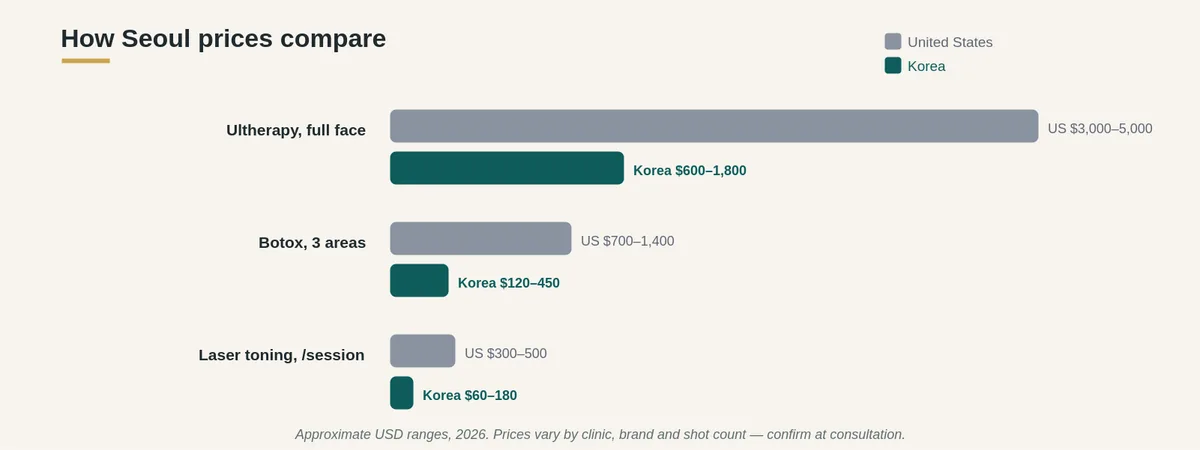
Across the board, expect Korean prices to run roughly 30 to 70% below the US and UK for the same treatment, with the biggest gaps on the expensive device-based procedures. A full-face Ultherapy that costs three to five thousand dollars in a major US city is often six hundred to eighteen hundred in Seoul, using the identical, genuine machine.
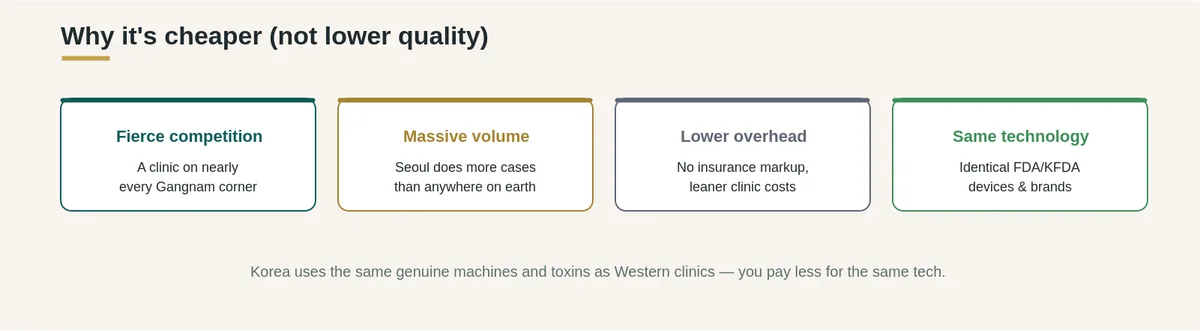
The crucial point is that this is not a quality discount. Korea is cheaper because of structural advantages, not corner-cutting. There is fierce competition, with dermatology clinics on practically every Gangnam corner driving prices down. There is enormous volume, as Seoul clinics perform more aesthetic cases per year than anywhere else on earth, which lowers the cost per procedure. Overheads are leaner and there is no insurance markup inflating the bill. And critically, Korean clinics use the same FDA and KFDA-approved devices and the same injectable brands as Western ones, alongside excellent, well-priced domestic options. You are paying less for the same technology, not less for less.
The price comparison, treatment by treatment
| Treatment | Korea | US | UK / Europe | Dubai |
|---|---|---|---|---|
| Botox (3 areas) | $120–450 | $700–1,400 | £300–700 | $550–1,090 |
| Rejuran (per session) | $110–370 | $600–1,000 | £300–600 | $400–820 |
| Laser toning (per session) | $60–180 | $300–500 | £150–350 | $150–400 |
| Ultherapy (full face) | $600–1,800 | $3,000–5,000 | £2,000–4,000 | $1,100–3,300 |
| Thermage FLX (full face) | $2,150–4,300 | $2,500–5,000 | £2,500–4,500 | $2,700–5,400 |
| HIFU (full face) | $360–1,450 | $1,800–3,500 | £2,000–4,000 | $400–1,600 |
Approximate 2026 ranges in USD. Per session unless noted; most treatments need a course. Confirm exact pricing at consultation.
A few notes on the table. Botox is where Korea is most dramatically cheaper, because excellent domestic toxins start at a tiny fraction of imported Allergan, so a single area can cost as little as thirty to fifty dollars. Rejuran and other skin boosters are typically priced per session and usually need a course of three to four. Ultherapy, Thermage, and HIFU are the device-based lifting treatments where the savings are largest in absolute terms. Thermage tends to show the smallest gap, since it is premium everywhere, while Korea's domestic HIFU devices like Shurink can be especially affordable.
The 2026 change: no more treatment tax refund
One important update affects your budget. For years, foreign patients could claim a 10% VAT refund on cosmetic and aesthetic treatments, which sweetened the deal further. That ended on 1 January 2026: the VAT refund no longer applies to the treatments themselves. The ordinary tax refund on retail shopping, including K-beauty at Olive Young, still works as normal. Korea remains far cheaper than the alternatives even without it, but you should budget the full treatment price rather than counting on getting 10% back. Some local booking platforms now run cashback schemes that partly fill the gap, so they are worth checking before you book.
Budget the real total, not the sticker price
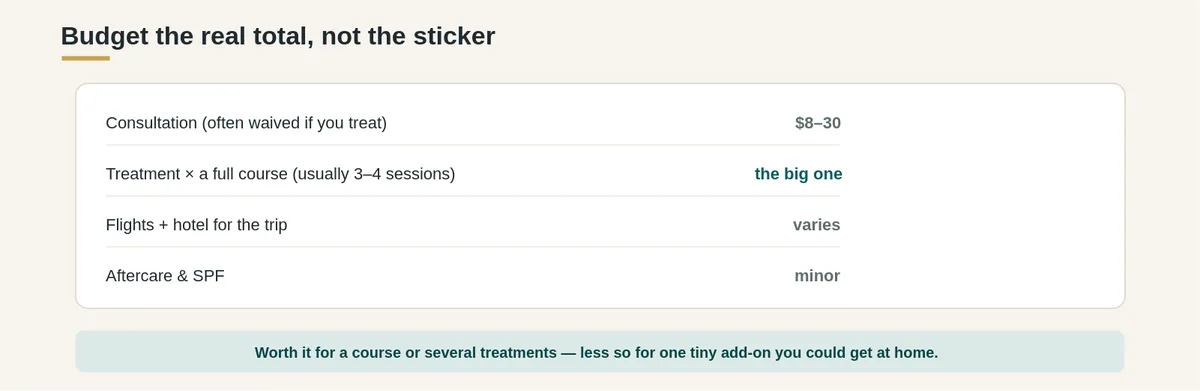
The per-session price is not the whole story, and treating it as such is the most common budgeting mistake. The single biggest factor is that most of these treatments are a course, not a one-off: skin boosters and many lasers need three to four sessions to deliver real results, so multiply that attractive per-session number accordingly. On top of the treatment, factor in a small consultation fee, often eight to thirty dollars and frequently waived if you proceed, plus flights, accommodation, and minor aftercare and sunscreen.
Once you add travel, the value equation depends on scale. For a single small treatment you could get at home, flying to Seoul rarely makes financial sense. But for a course of treatments, several procedures combined, or the bigger device-based work where Korea saves you thousands, the savings comfortably outweigh the trip, which is exactly why people build a holiday around it. The honest rule is that Korea wins decisively on volume and on expensive treatments, and is roughly break-even on one tiny add-on once flights are counted.
Cheaper is great, until it isn't
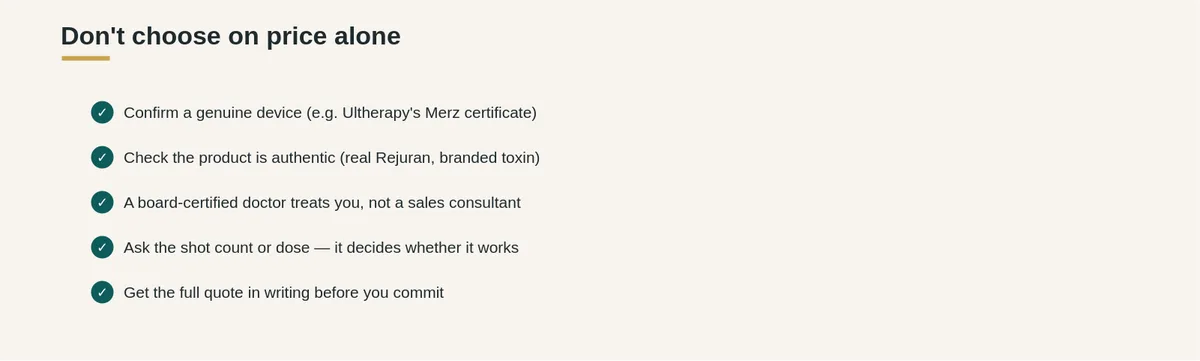
The flip side of a market this competitive is that rock-bottom prices can occasionally signal corners being cut, and price-shopping alone is risky for a medical procedure. A handful of checks protect you. Confirm the clinic uses a genuine device, authentic Ultherapy machines carry a Merz certificate of authenticity and an orange genuine-machine sticker, and ask to see it. Make sure injectables are authentic, real branded Rejuran and a named toxin brand, since counterfeits exist. Insist that a board-certified doctor performs the treatment rather than a sales-focused consultant, and be wary of clinics that route you only through salespeople.
Two more details matter. For device treatments, ask the shot count or dose, because a suspiciously cheap Ultherapy is often a low-shot session that will underdeliver; the number of shots, not just the headline price, determines the result. And always get the full quote in writing, including any add-ons and aftercare, before you commit. A reputable clinic will happily provide all of this. Very high-volume, factory-style clinics can offer the lowest prices but the most rushed care, so weigh price against the time and attention you will actually get.
How to get an accurate price
The best way to budget is to get a real quote before you fly. Most reputable Seoul clinics offer pre-arrival consultations by video or chat, which let them assess your skin and give a personalised plan and price rather than a generic range. Ask specifically what is included, how many sessions are recommended, which exact product or device is used, and whether packages or seasonal promotions apply, combination packages bundling a laser, an energy device, and a booster are common and usually cheaper than booking each separately. If you are planning the logistics around treatment, our 3-day Seoul skin-treatment itinerary covers how to fit it all into a short trip, and if you are still deciding which treatments you actually need, our [guide to Rejuran, exosomes and skin boosters]https://myguidekorea.com/trends/skincare/rejuran-vs-exosomes-vs-skin-boosters-korea-2026) explains what each one does.
Where Korea saves you the most
Not every treatment is worth a plane ticket, and being honest about that builds trust in the ones that are. The savings are largest, in absolute dollars, on the expensive device-based treatments: a full-face Ultherapy or Thermage can cost two to three thousand dollars less in Seoul than in a major Western city, enough to cover a good chunk of the trip on a single procedure. Courses of skin boosters are the next best value, because the per-session discount multiplies across three or four sessions. Combination packages, where a clinic bundles a laser, an energy device, and a booster, stretch the saving further still.
A simple worked example shows the logic. Say you want full-face Ultherapy plus a three-session Rejuran course. In a major US city that might run somewhere around four to six thousand dollars all in; in Seoul the same plan could land closer to fifteen hundred to two and a half thousand. Even adding a thousand or so for flights and a few nights' hotel, you are still ahead, and you get a trip out of it. Flip it around, though, and a single area of Botox you could get for a couple of hundred dollars at home is not worth flying for on its own. Stack your treatments, lean toward the expensive procedures and the courses, and the maths tips firmly in Korea's favour.
The takeaway
Korean skin treatments are genuinely, substantially cheaper than the US, UK, or Dubai, commonly 30 to 70% less, and that gap is real and driven by competition, volume, and lower overhead rather than lower quality. Budget for a course rather than a single session, remember the treatment tax refund ended in 2026, and add travel into your sums to know whether your particular plan pays off. Then protect yourself with a few simple checks on devices, products, and who is treating you. Do that, and Korea offers some of the best value in the world for skin treatments, without the catch the low prices might make you suspect.