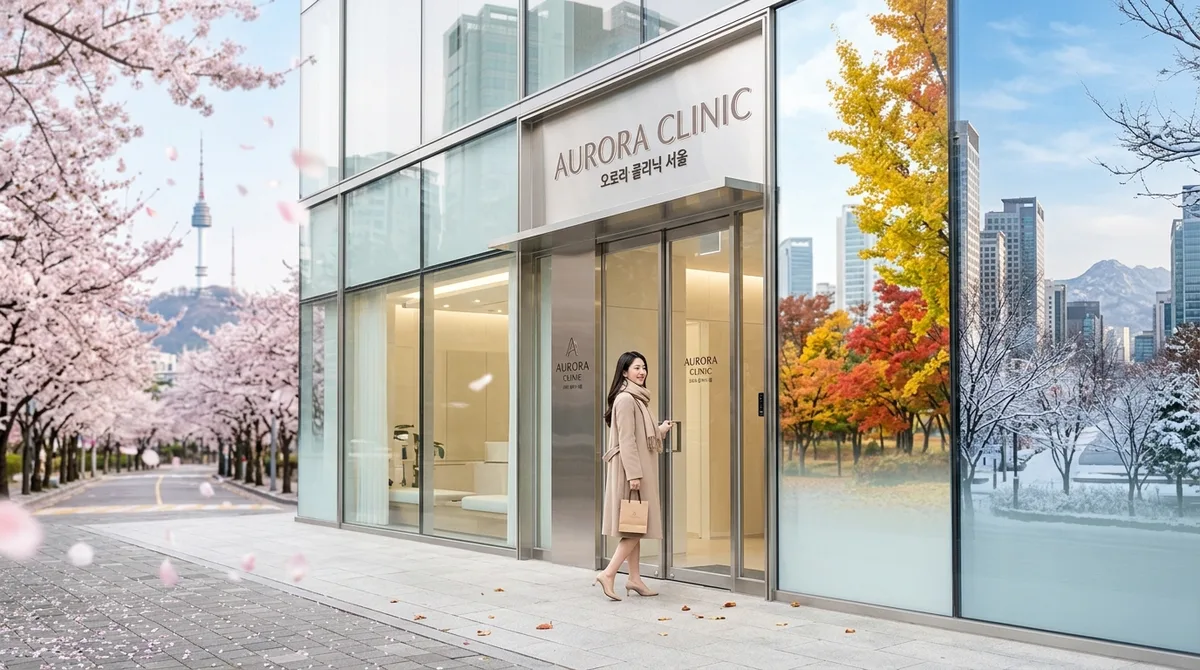
Timing matters more for skin treatments than it does for most types of travel. The season you choose affects how easily your skin recovers post-treatment, how much UV exposure you face during the healing window, whether yellow dust is actively irritating fresh injection sites, and how easy it is to get a same-week clinic appointment. Get the timing right and your results land better. Get it wrong and you are spending money on treatments while working against the environment around you.
Autumn wins on almost every count. But the full answer is more nuanced, because different treatments have different seasonal requirements, spring is manageable if you understand the yellow dust situation, and winter is genuinely excellent for laser and resurfacing work. Here is the complete breakdown.
The season ratings: a quick overview
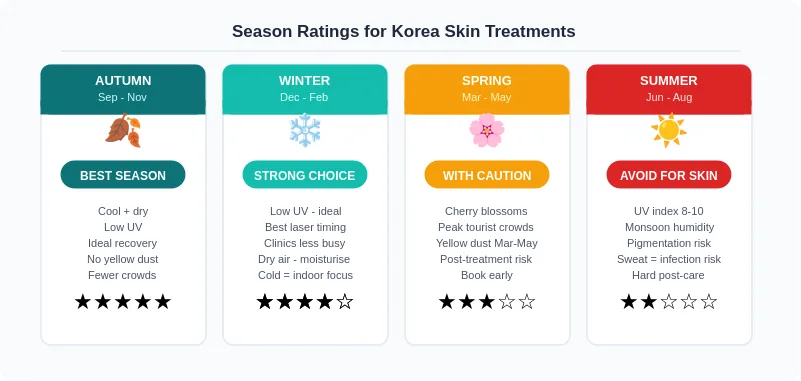
Autumn (September to November) is the consensus pick among Korean dermatologists and experienced medical tourists for a reason. Temperatures are mild and comfortable, UV levels are dropping, humidity is low, there is no yellow dust, and clinics are booking strongly but not impossibly. September and October are the sweet spot: the summer tourist surge has eased, the weather is excellent, and you can often book clinic appointments a week or so in advance rather than the two-plus weeks needed at peak times.
Winter (December to February) is a stronger choice than most tourists realise. UV levels are at their annual low, which matters enormously for laser treatments, pigmentation work, and anything that leaves skin temporarily sensitive to sun exposure. Korean clinics are at their quietest, appointments are easier to get, and the focus on indoor activity that cold weather brings suits a treatment-heavy itinerary well. The one consideration is that Seoul's indoor heating is aggressive and the air is very dry, which means post-treatment skin needs consistent moisturising. Barrier care becomes part of the aftercare routine rather than an optional extra.
Spring (March to May) is popular, beautiful, and complicated. The cherry blossoms are real and worth seeing. So is the yellow dust. From late February through to May, fine particulate matter blown from the Gobi Desert and China's industrial regions settles across Seoul on a significant number of days each month, and that particulate matter is genuinely problematic for recently treated skin. UV levels are also climbing from March onwards. Spring is workable, but it requires more planning and more post-treatment care than the other seasons.
Summer (June to August) is the season to avoid for most skin treatments. UV index regularly hits eight to ten during peak months. Humidity is intense from the monsoon season onwards. Sweat on healing skin raises infection risk. The combination of strong UV and high humidity after laser treatments or resurfacing significantly increases the risk of post-inflammatory hyperpigmentation, where the skin produces excess melanin in response to sun exposure during the healing phase. If you are visiting Korea in summer, lean toward treatments with zero downtime, scalp care, glass skin facials, and Aqua Peel, rather than anything that leaves skin in a vulnerable state.
Month by month: UV, crowds, and yellow dust
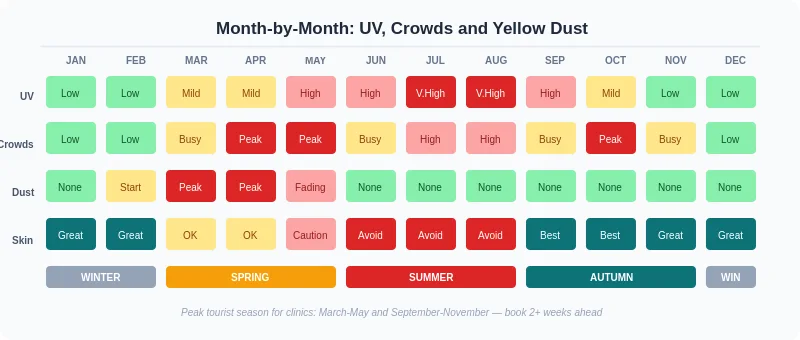
The calendar tells the clearest story when you look at three factors together: UV level, clinic crowd level, and yellow dust risk. January and February score well on all three, low UV, low crowds, and no dust. The skin treatment rating is excellent, and these months represent the most underrated window for visitors who can travel off-peak.
March through May is where the trade-offs stack up. Crowds build sharply from cherry blossom season in late March, peaking in April and May. Yellow dust peaks in March and April before fading in May. UV starts climbing. The skin treatment rating drops to caution territory, not avoid, but plan carefully. If you are going in spring, target late April or early May when dust is fading, book clinic appointments well in advance, and build yellow dust management into your post-treatment routine.
June through August: high UV, high humidity, peak domestic tourist season, and difficult conditions for post-treatment skin. The skin verdict is avoid for most clinic treatments involving any downtime or sensitivity. June is the softest month in this window; if your trip falls in June, you are working with milder conditions than July or August.
September through November is where everything lines up. UV drops from September, crowds ease after the October peak, yellow dust is entirely absent, temperatures are mild and dry, and the foliage from mid-October onwards is genuinely beautiful. November is particularly underrated, a month into autumn's stability with noticeably lower crowds and easy clinic access. December picks up where November left off, already moving into the excellent winter window.
Which treatments to time for which season
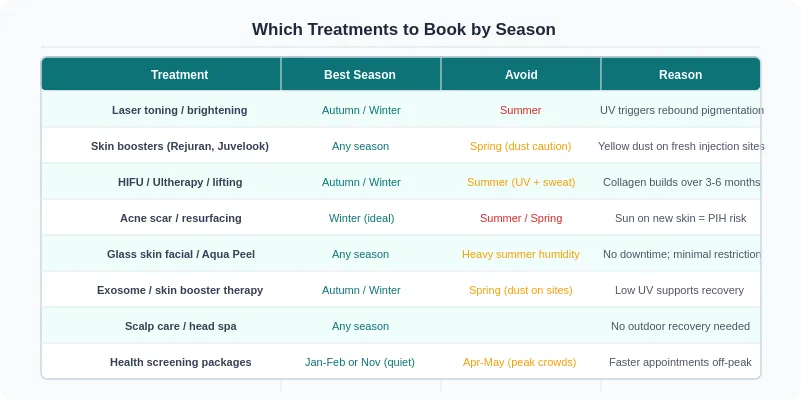
Laser toning and brightening treatments are among the most UV-sensitive procedures available. UV exposure during the post-treatment window, which can run from two to four weeks for more intensive sessions, risks triggering post-inflammatory hyperpigmentation. Autumn and winter are the clear recommendation. Avoid summer. Spring is acceptable with strict sun avoidance, but autumn or winter removes that pressure entirely.
Skin boosters like Rejuran and Juvelook can be booked in any season without major restriction, with one caveat: in spring, yellow dust landing on fresh injection sites in the forty-eight to seventy-two hours post-treatment is a real concern. Ask your clinic to schedule injection appointments on days with low dust forecasts, and stay indoors as much as possible immediately after treatment. The MiseMise app gives real-time air quality readings that locals use exactly for this purpose.
HIFU, Ultherapy, and other energy-based lifting devices work by stimulating collagen production over three to six months after treatment. The procedure itself has minimal external recovery requirements, but the skin is mildly sensitised for a week or two afterwards. Autumn and winter are the optimal booking windows. If you book lifting treatments in November or December, the collagen remodelling phase unfolds through winter and the results fully manifest in spring and summer, which is exactly when you want to look your best.
Acne scar and resurfacing treatments involve the most aggressive post-treatment UV restriction of any common clinic procedure. Fractional laser, deep peels, and microneedling all create a window of several weeks where the skin is actively rebuilding. Winter is the ideal booking window here. Avoid spring and summer. If you must book in spring, target early March before UV levels climb and commit to strict sun avoidance for the full healing window.
Exosome skin therapy and advanced skin booster protocols follow similar logic to injection-based treatments. Low UV during the recovery window is beneficial, and yellow dust avoidance in the forty-eight hours post-treatment is sensible. Autumn and winter are optimal, though any time outside peak summer works well with basic aftercare.
Glass skin facials, Aqua Peel, and scalp treatments including head spas are the most season-agnostic options on the menu. These carry little to no downtime, minimal UV restriction, and no meaningful yellow dust risk. They can be booked year-round and are the best choice for visitors travelling in summer who still want to experience Korean clinical skin care.
Yellow dust: what skin treatment tourists need to know
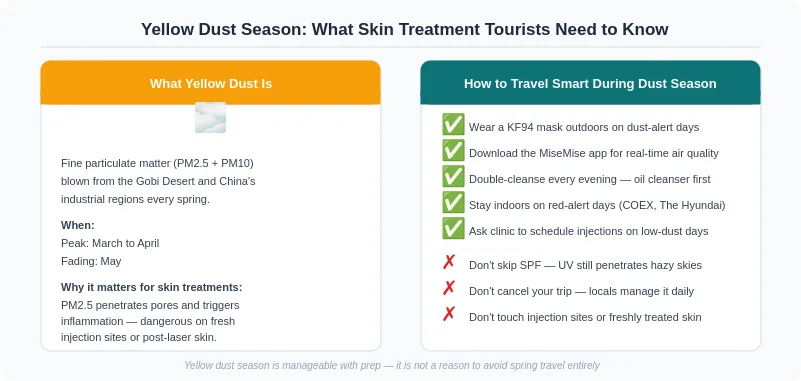
Yellow dust gets talked about in alarming terms online, and the reality is more nuanced. Locals in Seoul manage it every spring without cancelling their lives. It does not make spring travel impossible. What it does is add a layer of post-treatment management that does not exist in other seasons.
The particulate matter in yellow dust, PM2.5 and PM10, is fine enough to penetrate open pores and settle on skin. On intact, healthy skin this is manageable with double-cleansing and basic mask-wearing outdoors. On recently treated skin, fresh injection sites, newly lasered skin, or sensitised post-peel skin, it presents a meaningful inflammation and infection risk during the healing window.
The practical approach for spring treatment tourists: download the MiseMise app before you arrive, which tracks real-time PM2.5 levels using World Health Organization standards. On red-alert dust days, keep injection-treated skin indoors and covered. Ask your clinic to time treatments for days with a low or moderate dust forecast if your schedule has flexibility. Double-cleanse every evening using an oil-based first step, regardless of dust levels. Keep SPF on consistently, UV still penetrates hazy spring skies.
On severe dust days, Seoul's enormous indoor spaces are genuinely world-class. COEX Mall, The Hyundai Seoul, and the underground networks connecting major stations are full alternatives to outdoor sightseeing, and none of them require you to compromise your post-treatment skin to get around.
Practical booking tips by season
- Autumn peak booking window: book clinic appointments two to three weeks in advance for September and October, the most popular months for medical tourists.
- Winter advantage: January and February are the quietest months for Seoul clinics, often allowing same-week or even same-day appointments for non-surgical treatments.
- Spring strategy: target late April and May when dust is fading, UV is manageable with SPF discipline, and cherry blossom season has slightly eased.
- If you are visiting in summer: prioritise zero-downtime treatments only, scalp care, glass skin facials, and Aqua Peel, and leave intensive laser or resurfacing work for a future autumn or winter trip.
- For laser, resurfacing, and pigmentation treatments: winter booking gives you the lowest UV of the year and the best possible healing conditions.
- For lifting treatments (HIFU, Ultherapy): book in autumn or early winter so collagen remodelling completes through the low-UV months and peaks in spring.
- Whatever season you visit: bring a KF94 mask for spring dust days and a consistent SPF50+ for summer and early autumn.
The takeaway
If you can choose freely, September and October are the best months to visit Korea for skin treatments. Low UV, no yellow dust, comfortable temperatures, and easing crowds after the summer peak. November and December extend the excellent window into winter, which is itself underrated for laser and resurfacing work. Spring is manageable with preparation and worth considering if the cherry blossom timing matters to you. Summer is the season to plan around rather than plan for, excellent for experiencing Seoul, but not the right environment for anything that leaves skin needing sun protection and recovery time.
For a curated treatment itinerary, see our 3-Day Seoul Skin-Treatment Trip. For a full breakdown of what treatments cost, see the Korea skin treatment cost guide. For a complete introduction to planning your first trip, see the Medical Tourism in Korea first-timer guide.
Related: Korean Scalp Care: What Tourists Are Adding to Their Trips | Ultherapy vs Thermage vs HIFU: Korea's Lifting Devices Explained | The Korean Glass Skin Facial